
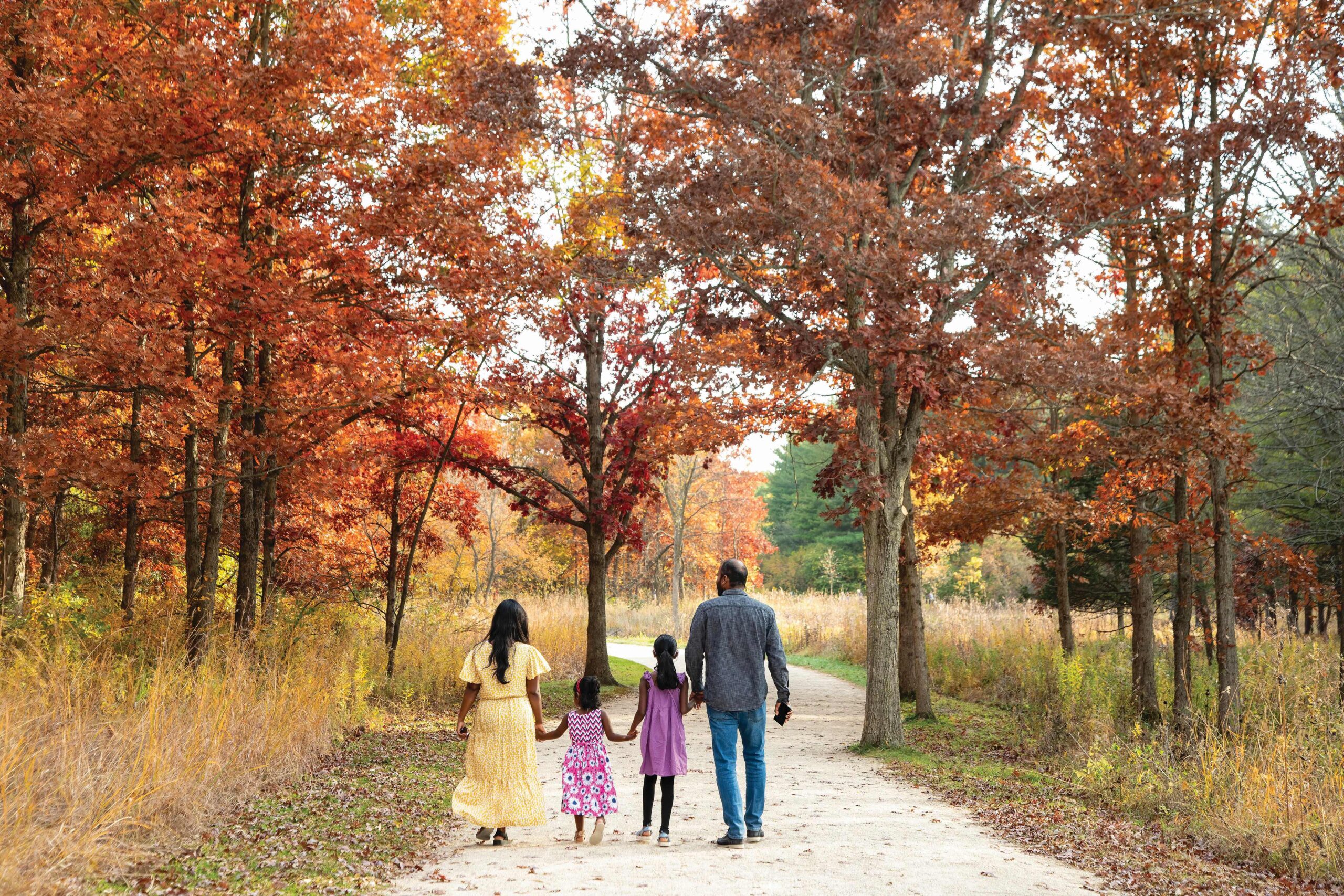
WHAT VOTING YES LOOKS LIKE ON THE GROUND. Across Illinois, voters have repeatedly affirmed a shared belief: protecting open space, clean water, and wildlife are vital to the health of our region. Beginning with Cook County’s successful Vote Yes for Clean Air, Clean Water, and Wildlife referendum in 2022, and continuing with voter-approved measures in DuPage, Kane, Lake, McHenry, and Will Counties in 2024, these conservation ballot wins represent a long-term commitment to nature, climate resilience, and equitable access to the outdoors.
Openlands played an integral role in these efforts, bringing our land-centered leadership to regional coalitions working in partnership with county forest preserve systems and conservation districts. Illinois was an early innovator in land protection, establishing one of the oldest and most extensive forest preserve systems in the country. The interconnected network of prairies, woodlands, wetlands, rivers, and lakefront landscapes that surround our communities makes this a remarkable system that recognizes land as essential infrastructure for healthy, livable communities.
Building on this foundation, these voter-approved measures in Cook, DuPage, Kane, Lake, and McHenry Counties—along with a $50 million bond in Will County— are already delivering results, advancing a $1.6 billion, 20-year investment in the region’s natural areas that began in 2022. This funding protects land, improves infrastructure, and expands programs that connect people to nature.
Cook County
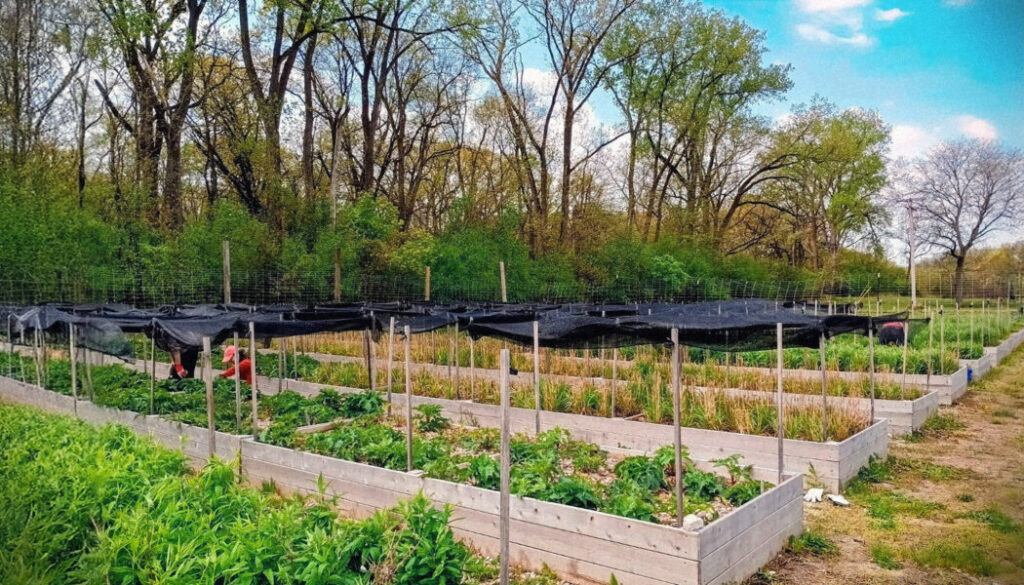
Visitors can now see the impact of conservation investments across the Forest Preserves of Cook County. The 2022 referendum generates more than $42 million annually, which helps to support land acquisition and large-scale restoration efforts with the goal to restore 30,000 acres of habitat by 2040. Recently, this funding has allowed the Forest Preserves to expand a seed bank and propagation partnership with the Chicago Botanic Garden, a forward-looking response to nationwide shortage of native seeds needed for restoration. The program collects native seeds locally, grows them in purpose-built nurseries, and redistributes them across preserves, ensuring the right plants are returned to the landscapes where they belong.
This approach is transforming priority areas such as Bartel Grassland and Red Gate Woods in the Palos Preserves region, where locally sourced seed helps prevent invasive species from returning and accelerates ecological recovery. Supported by volunteers, the native seeds program preserves regional plant genetics, strengthens biodiversity, and demonstrates how voter-approved funding is enabling creative, place-based solutions to restore Cook County’s landscapes.
DuPAGE COUNTY
In 2024, DuPage County voters approved an increase in their Forest Preserve District’s operating tax levy, generating $17 million annually for conservation. This new funding enabled the acquisition of 35 acres of the Bolger-Gladstone Farm and an additional five acres in Naperville, connecting Danada Forest Preserve and The Morton Arboretum. These strategic acquisitions have now created a connected corridor of over 2,500 acres in central DuPage. Referendum dollars also fully fund operations at the DuPage Wildlife Conservation Center, home to the largest wildlife rehabilitation hospital in Illinois, which treats more than 10,000 injured native animals each year.
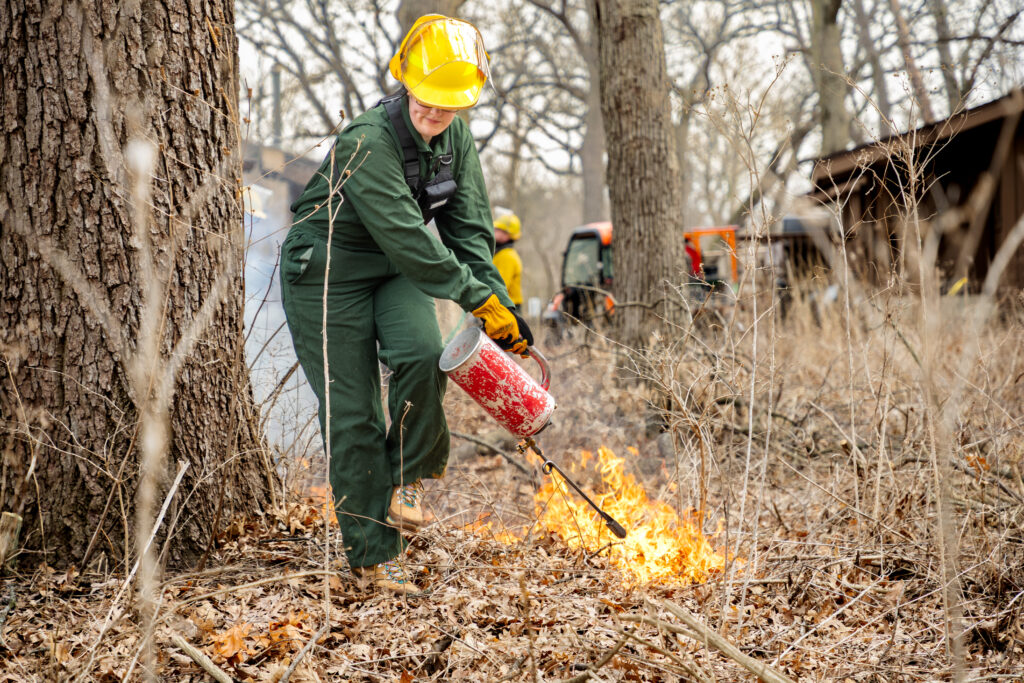
This funding will also support habitat restoration of 26,000 acres across the county, including a major project at Springbrook Prairie Forest Preserve, an Illinois Nature Preserve critical to regional bird populations.
KANE COUNTY
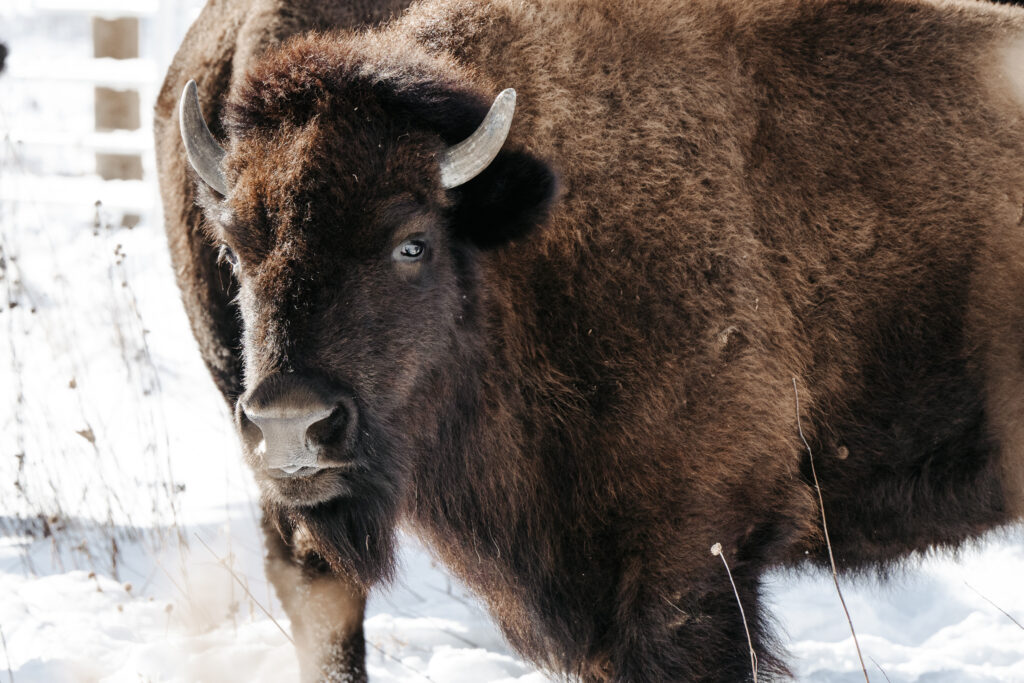
When voters in Kane County approved an increase in their Forest Preserve District funding, they voted yes to$5.7 million annually for land and wildlife conservation. In 2025, for the first time in more than 200 years, American bison returned to Kane County—a milestone project made possible through the collaboration between the Forest Preserve District of Kane County, the American Indian Center of Chicago (AIC), and Ruhter Bison, a family business led by Matt Ruhter, Openlands’ Senior Counsel and Director of Land Preservation. The referendum funding will support expanding the prairie to nearly 100 acres and growing the herd to approximately 20 animals. The investment will support land acquisition, ecological restoration, and culturally significant stewardship practices that improve soil health, biodiversity, and long-term resilience. The return of bison reflects what Kane County residents voted for in 2024. Their investment in land restoration is bringing wildlife back to the region and shaping the character and future of their home.
LAKE COUNTY
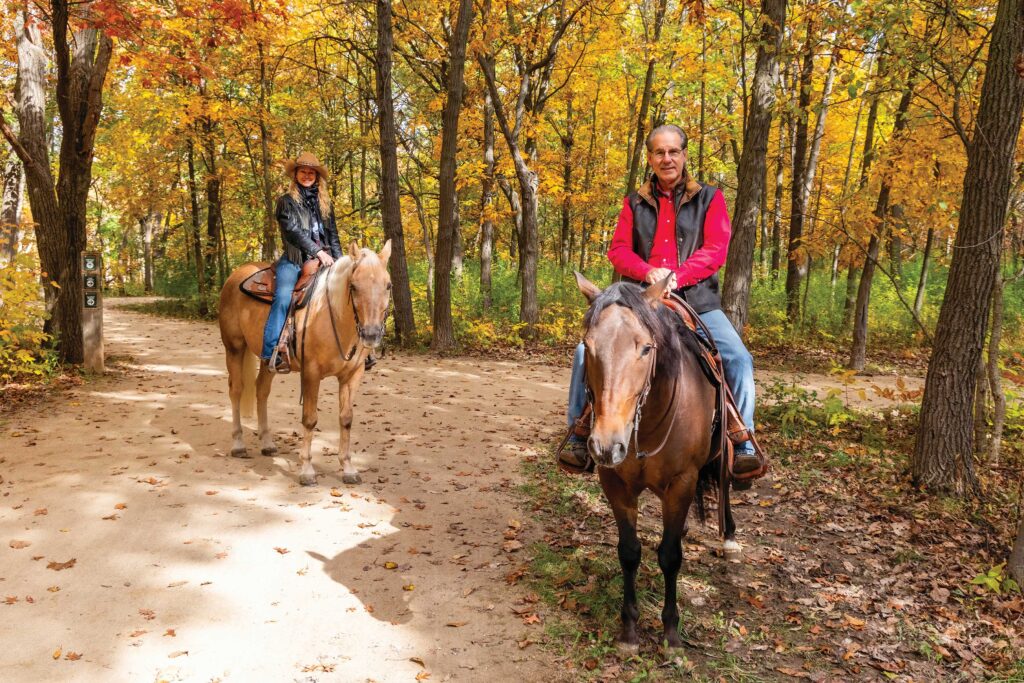
Lake County’s unique mix of ecosystems supports the highest number of endangered and threatened species among all Illinois counties. In 2024, voters approved $155 million in capital funding over the next ten years for the Lake County Forest Preserves. From the funding, $65 million will protect approximately 1,400–2,000 acres of land, $30 million will support ecosystem restoration, and $60 million will improve public access across the county. Projects underway include adding roughly eight miles of regional trails, along with new internal trails within preserves that pass through vital corridors. The funding will complete the remaining segment of the 41-mile Millennium Trail and create a 2.8-mile section of trail through Waukegan Savanna Forest Preserve to connect Lyons Woods Forest Preserve to the Des Plaines River Trail and Greenway.
McHENRY COUNTY
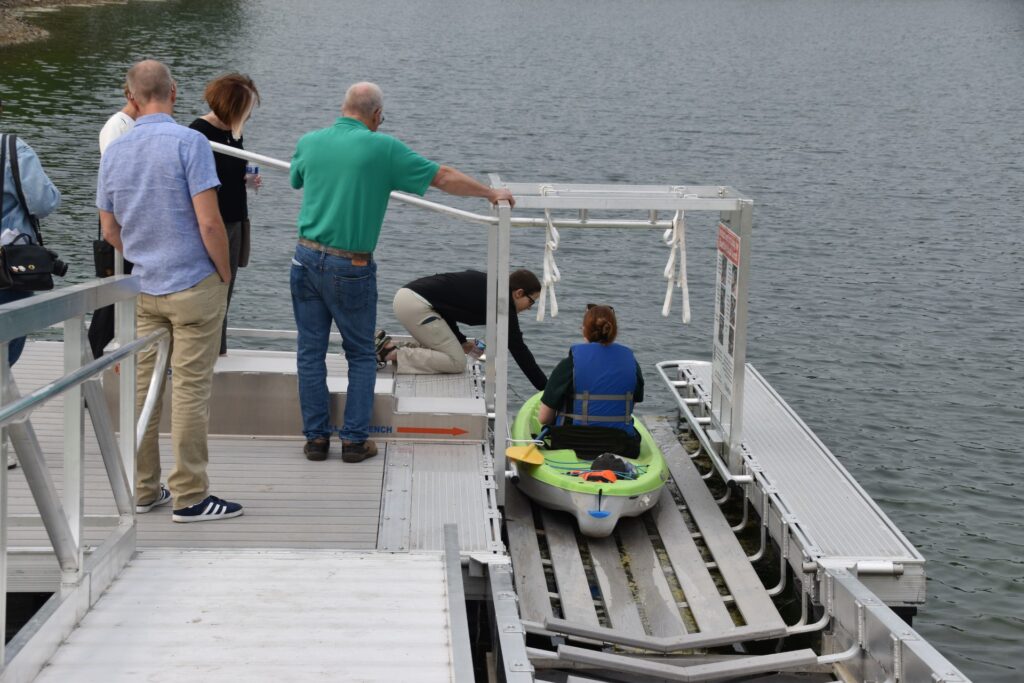
For the McHenry County Conservation District, recent investments are improving both public access to nature and long-term ecosystem health. At the Hollows Conservation Area, the reopening of Lake Atwood introduced a fully accessible paved trail around the lake, a second accessible fishing pier, an ADA-compliant kayak launch, and other visitor-focused upgrades. Following a stream restoration, the District also completed Illinois’ first translocation of the mottled sculpin, a state-threatened freshwater fish, to create a new protected population—only the second such project nationwide.
While the referendum doesn’t fund these projects directly, they would not be possible without it. With stable funding ahead, the District is launching a long-term conservation planning effort ”Forward to 2040 with a Vision to 2071” to establish the District’s priorities and direct future resource allocation.
WILL COUNTY
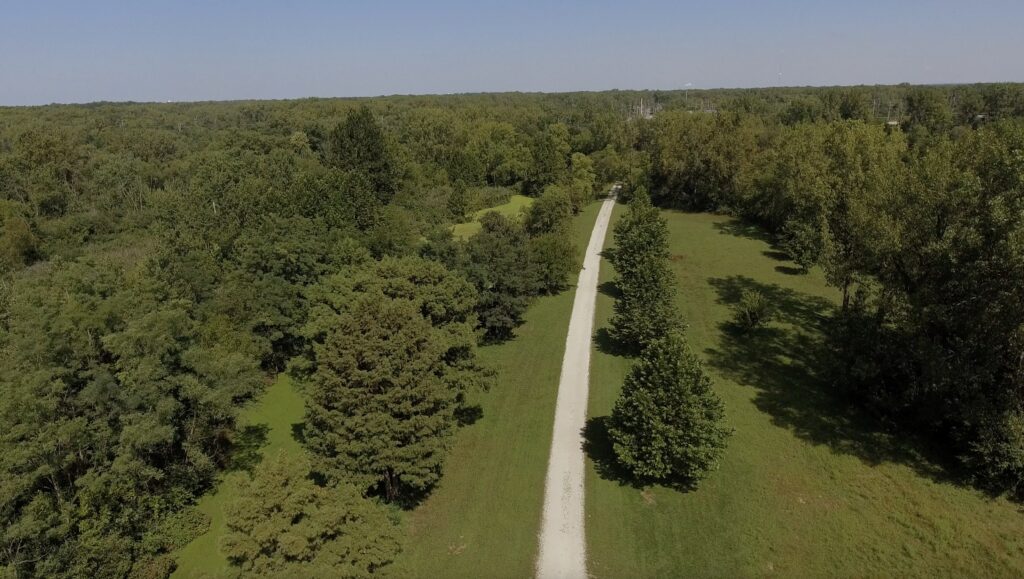
Will County Forest Preserve District’s $50 million general obligation bond is shaping the county landscape. The Board approved the bond in 2024 to fund the District’s 2025–2030 Capital Improvement Program. The bond dedicates $25 million to preserving 1,000-1,250 acres of land, $12 million to critical regional and local trail connections, and $13 million to restoring 2,500 acres of habitat.
In 2025, the District completed three major land acquisitions, each advancing more connected and resilient landscapes across the region. In Crete Township, the District acquired 495 acres adjacent to Goodenow Grove Nature Preserve— the second largest property acquisition in the District’s history—protecting Plum Creek and laying the groundwork for a future Vincennes Trail corridor. In Custer Township, the District acquired 241 acres near the state and forest preserve lands, protecting a rare and biodiverse sandy landscape. And in Plainfield, the addition of a 40-acre parcel next to Riverview Farmstead Preserve closes a critical gap in the DuPage River Greenway, expanding public access and strengthening connections to Eaton Preserve.
A REGION OF GLOBAL SIGNIFICANCE
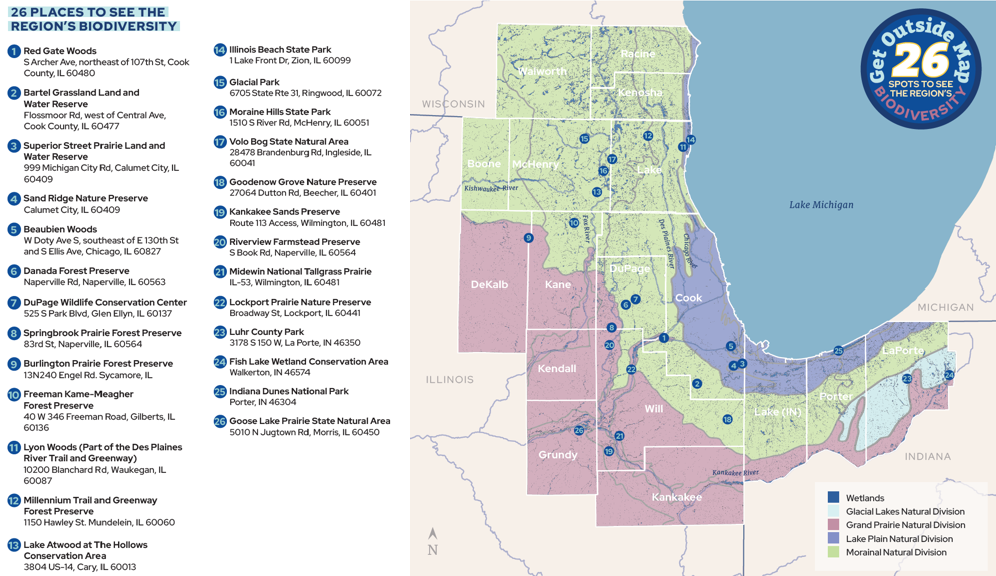
THIS IS A REGION OF GLOBAL SIGNIFICANCE, shaped by landscapes that support people, wildlife, and one of the world’s largest freshwater systems. This map highlights Openlands service area and the natural divisions within it, showing how these varied landscapes form the foundation of the region’s remarkably rich and biodiverse ecosystem
Spanning 17 counties across three states, the region includes nearly 10 million people, 5.6 million acres of land, and 169 miles of Lake Michigan shoreline. These landscapes formed between 2,000–15,000 years ago as retreating glaciers formed rolling hills, glacial lakes, flat plains, and expansive prairies. Influenced by the different stages of Lake Chicago’s glacial retreat, this shared geologic history continues to shape how nature thrives today and underscores the importance of protecting these lands.1
Rolling hills shaped by glaciers (Morainal)
While many people picture our region as flat, much of it actually consists of gently rolling hills deposited by retreating glaciers thousands of years ago. These hills with rich clay and silt-based soils, support a diverse mix of prairies, savannas, woodlands, wetlands, and streams. Organic soils in this natural division can support fens and bogs.
Landscapes shaped by water and ice (Glacial Lakes)
Located in the eastern part of Openlands’ service area, this region was formed by glacial meltwaters, creating uneven terrain with lakes and kettle ponds. The area also supports a mix of forests, savannas, and diverse wetland habitats, such as bogs, fens and marshes.
Flat lands and dunes from ancient lakes (Lake Plain)
Once covered by glacial Lake Chicago, these flat plains include beach ridges, dunes, and wetlands. These lands support black oak savannas, sand prairies, and marshes.
Prairies and river valleys (Grand Prairie)
Once one of the most expansive prairie landscapes in North America, this region was defined by broad, flat grasslands. Today, only small remnants of prairie remain, interwoven with river valleys, wetlands, and rocky areas. Historically, these prairies included dolomite prairies, sedge meadows, marshes, and river bluffs —creating a rich mosaic of grasslands and wetland habitats.
1. For more information on the region’s diverse habitats, plant–insect interactions, species distributions, and local biodiversity, please refer to Flora of the Chicago Region: A Floristic and Ecological Synthesis by Gerould Wilhelm and Laura Rericha.