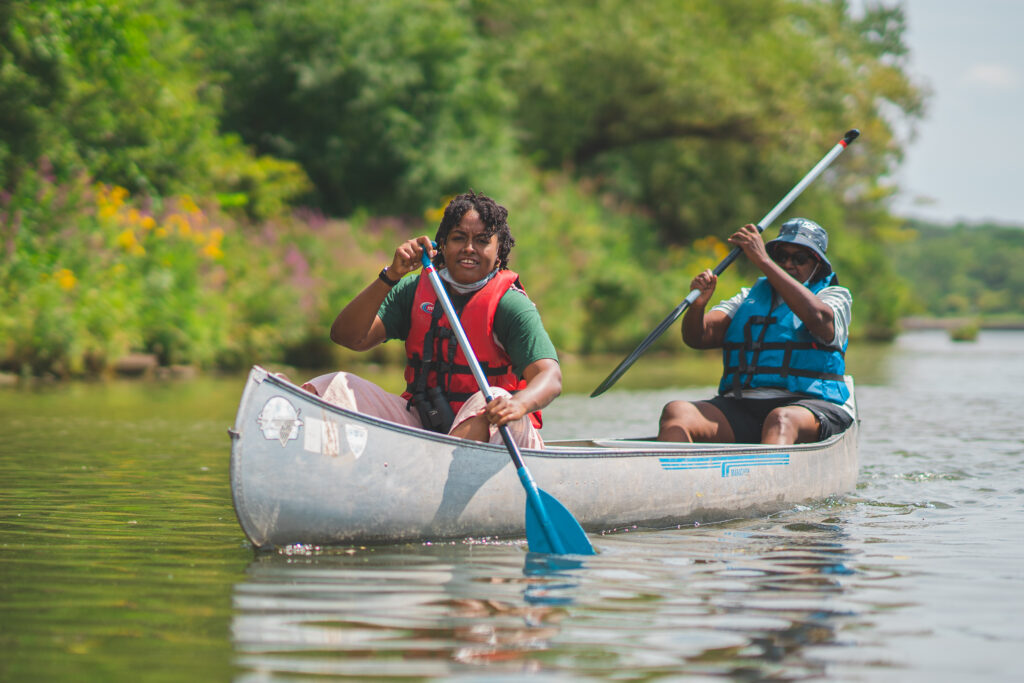
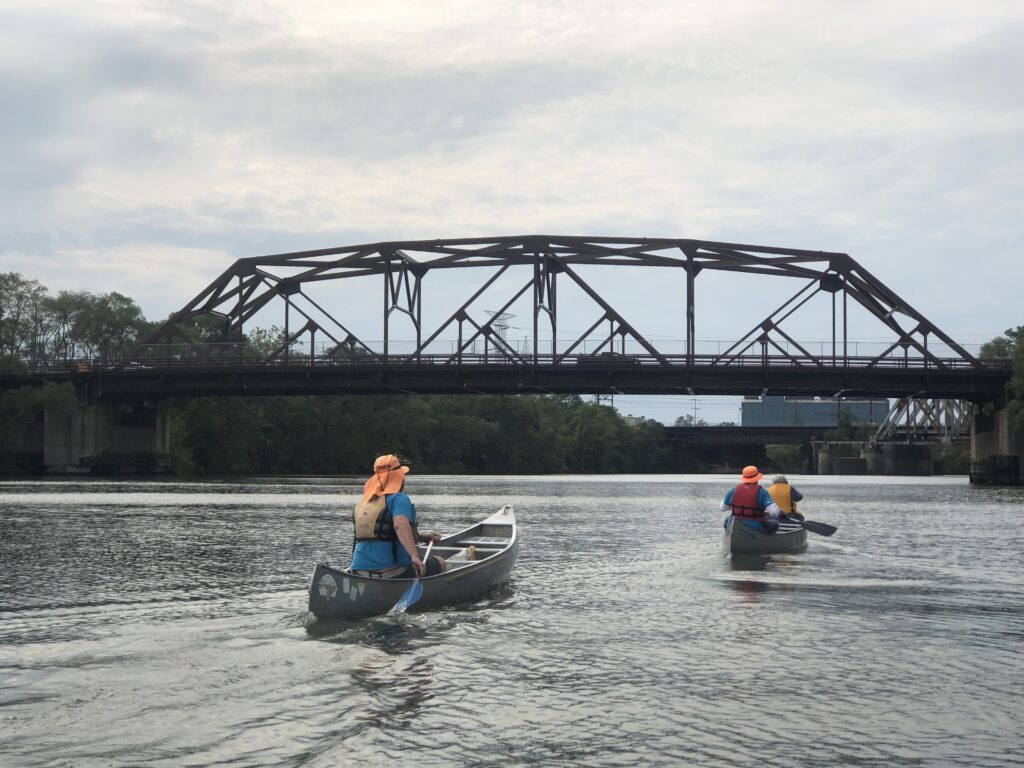
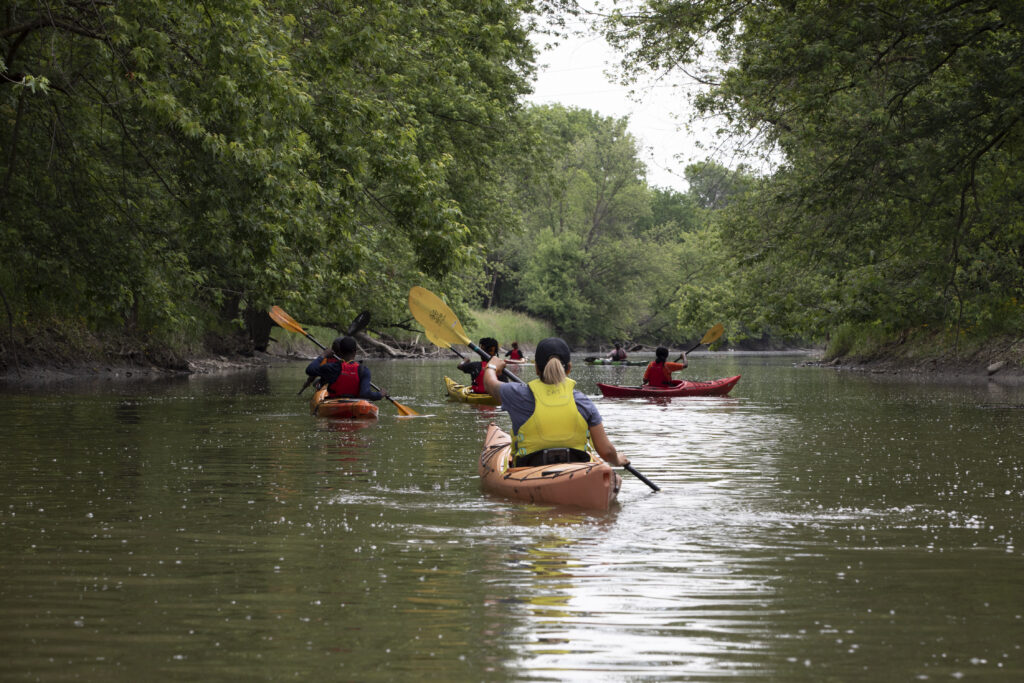
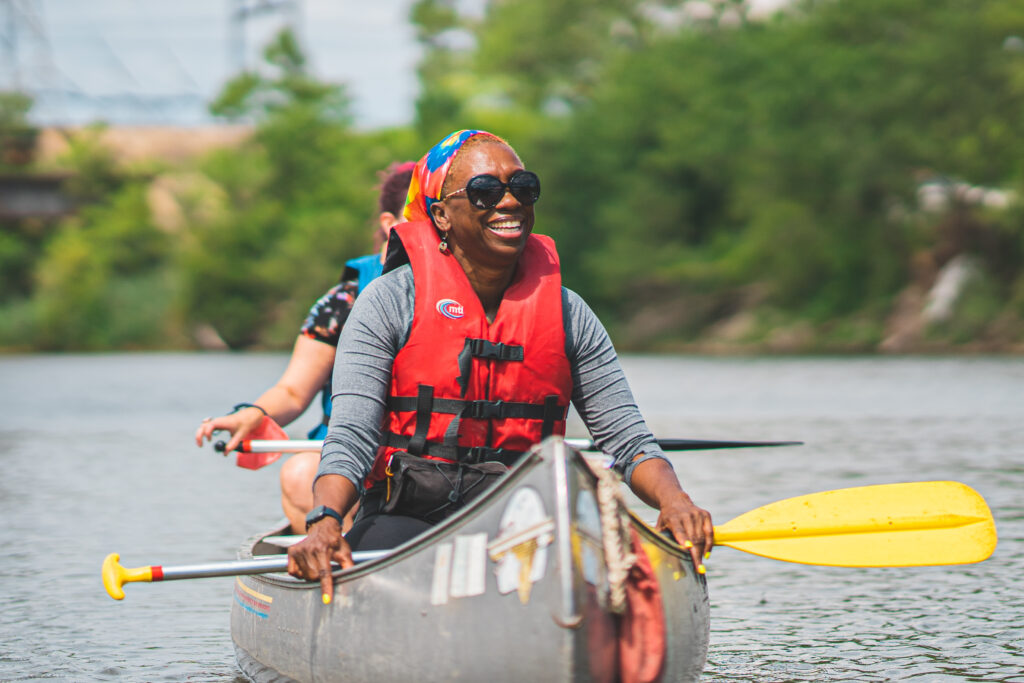
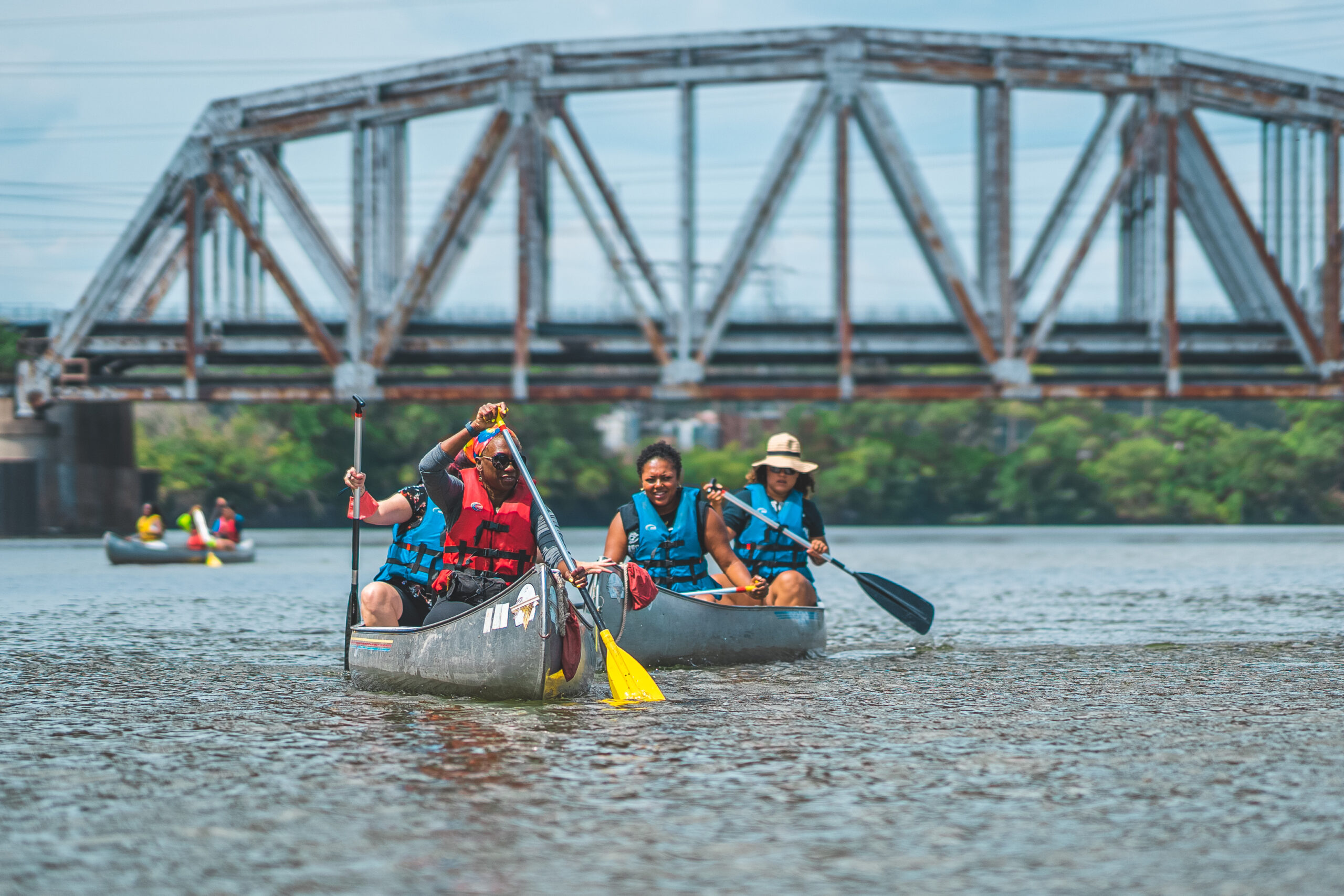
The African American Heritage Water Trail is a part of the Calumet Heritage Area and was developed in partnership with the communities. Learn more about the region, places to see, and things to do below.
Reconnecting People to Nature in the Calumet Region
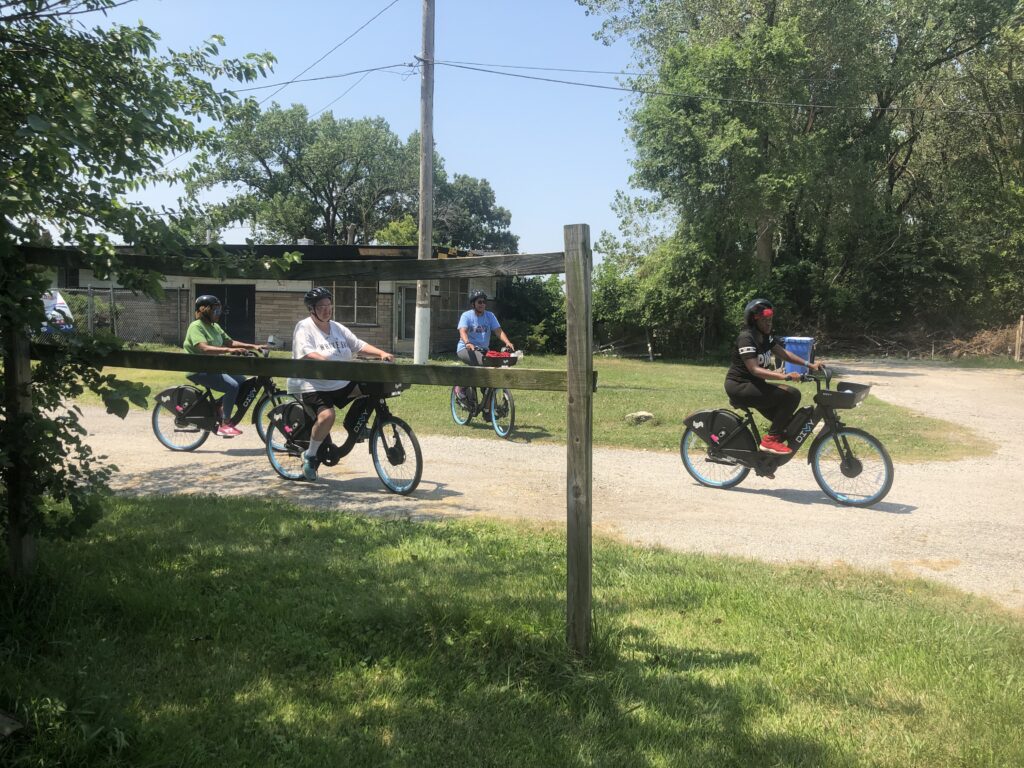
The Calumet region, along the southern shore of Lake Michigan, is home to some of the Chicago region’s most remarkable natural areas. Despite its industrial heavy history, the region contains rich biodiversity, including several forest preserve sites, Lake Calumet, and the Lake Michigan shoreline. However, many communities are unaware that opportunities for paddling, biking, and hiking are available in their own backyard.
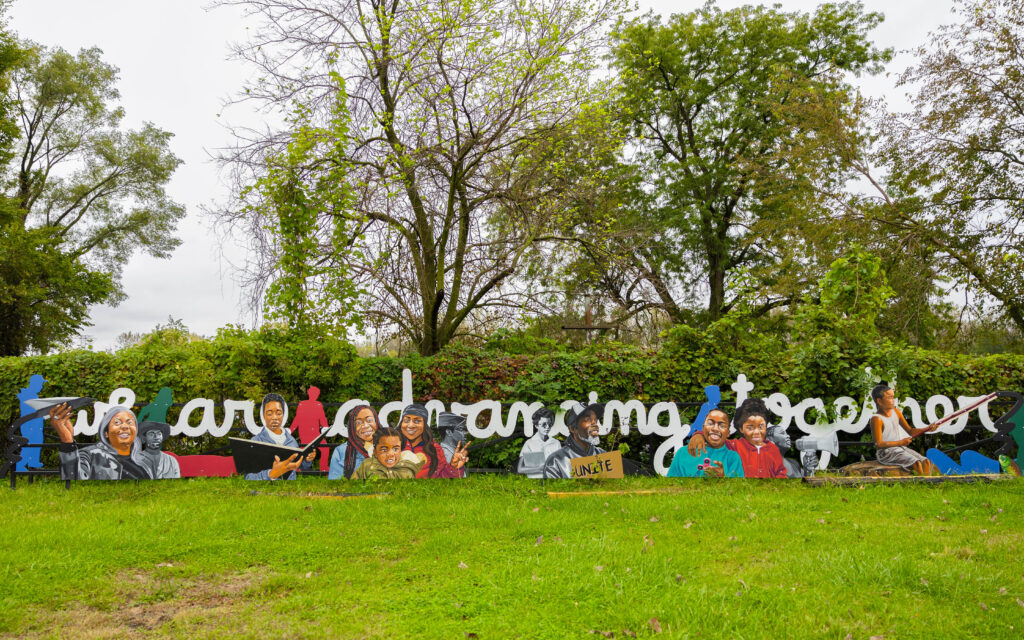
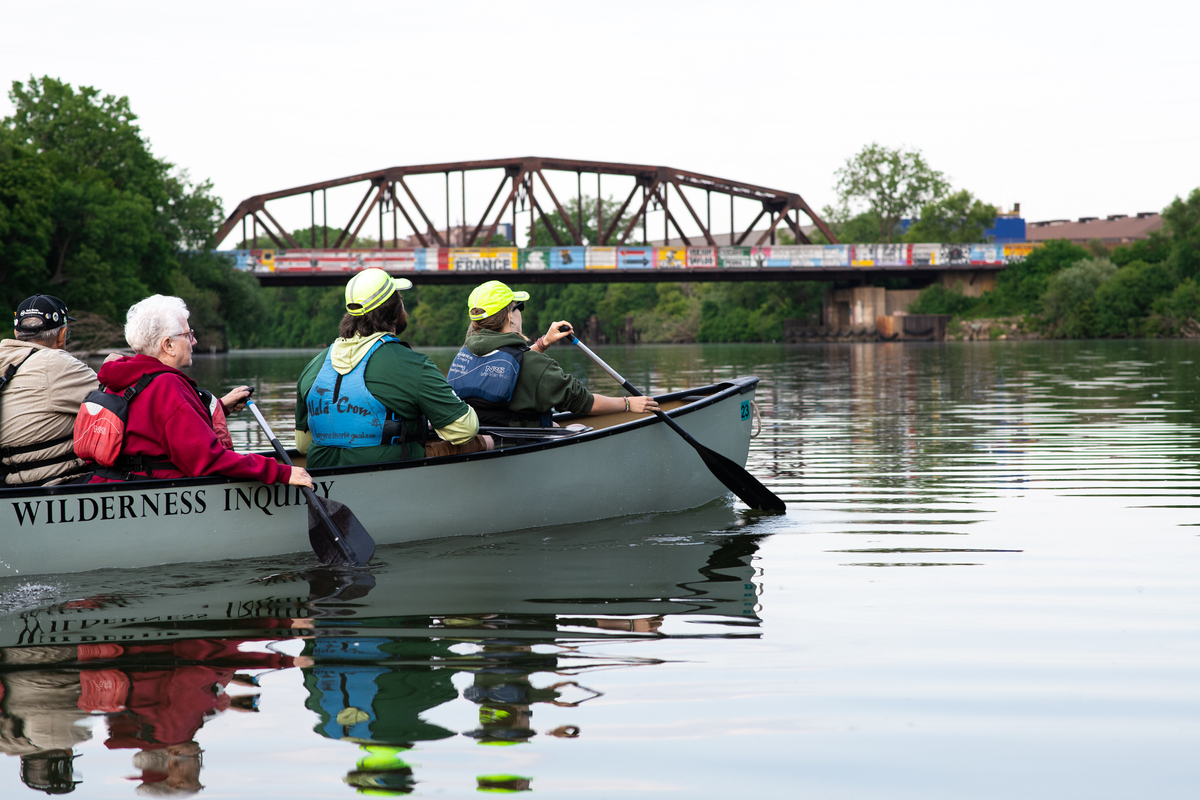
Openlands is helping connect local communities to these landscapes through programs like the African American Heritage Water Trail. Created in 2020, the African American Heritage Water Trailhighlights nearly 180 years of African American history along the Little Calumet River, including sites like Ton Farm, which served as a stop for freedom seekers navigating the Underground Railroad. The trail has received national recognition, including being featured in The New York Times’ ’52 Places For A Changed World’ list, and a recognition from the 23rd annual Chicago Innovation Awards.
Download an Openlands African American Water Trail brochure
Soundtrack for the Little Calumet River African American Heritage Water Trail
The Soundtrack for the Little Calumet River AAHWT is available as an immersive audio guide for the AAHWT, inviting listeners to experience the history, culture, and lived experiences that shape this landscape.
The soundtrack brings five key locations along the trail to life through a blend of oral histories, and original soundscapes. Drawing on the voices of residents, ancestors, and heritage keepers, the soundtrack is a local perspective on the people, places, and stories that continue to define the Little Calumet River corridor.
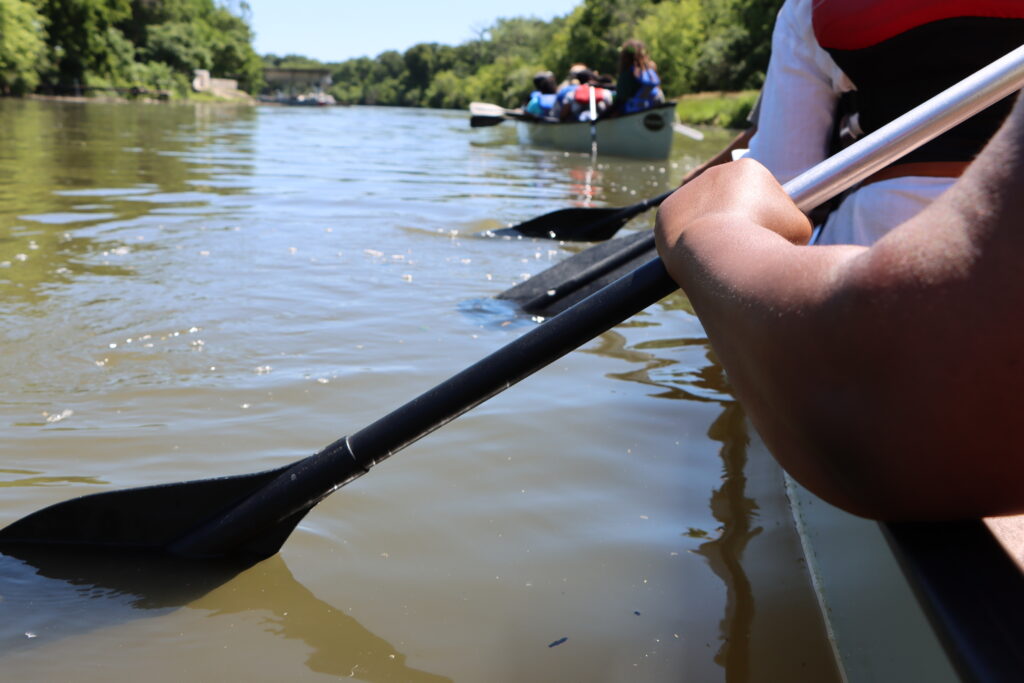
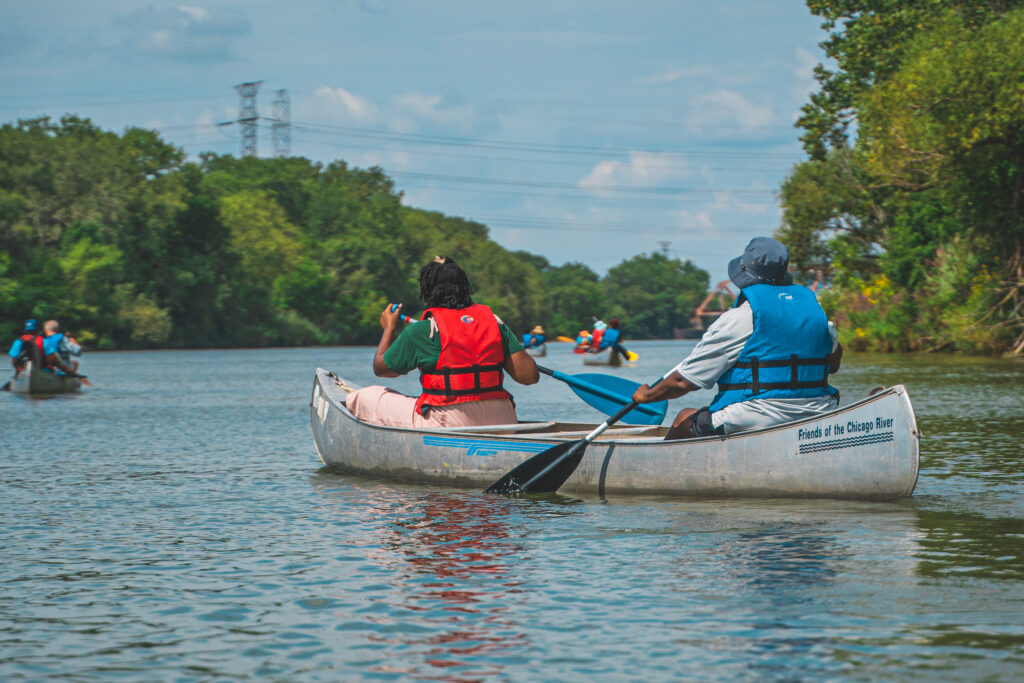
The soundtrack is designed to be listened to at stops associated with the track or anywhere on the water trail to experience the history in the natural environment. We recommend launching from the accessible launch at Beaubien Woods and paddle or cruise east along the river. More than a tour guide, the soundtrack serves as a living archive—connecting visitors to the enduring legacy, resilience, and cultural heritage of the AAHWT.
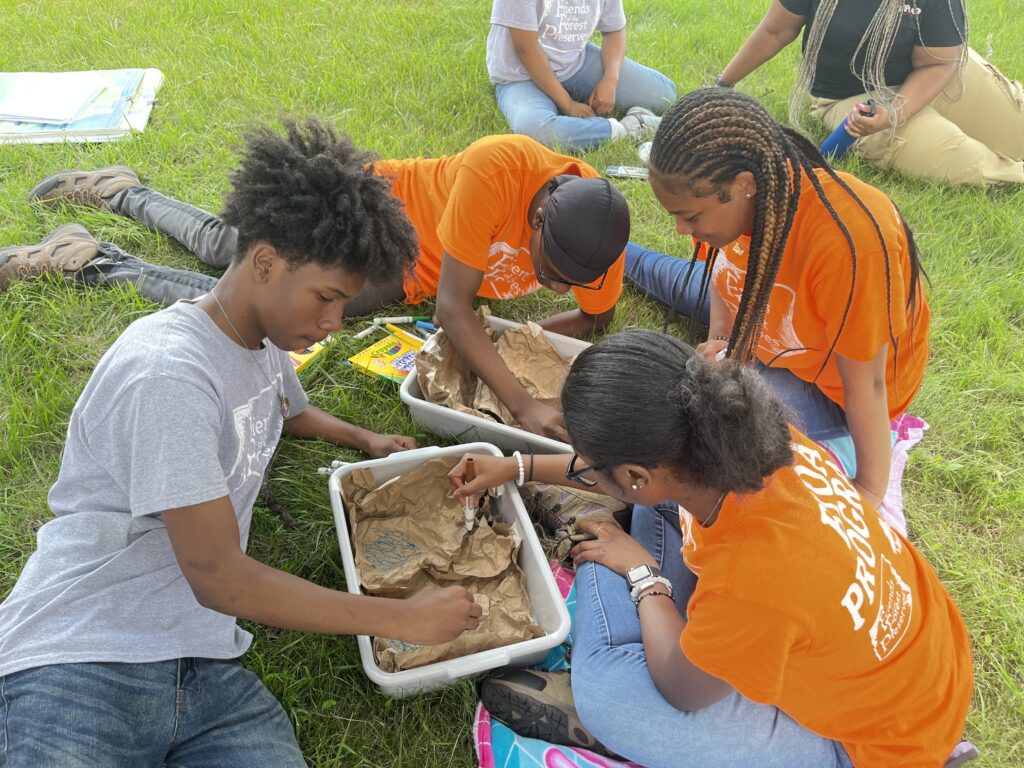
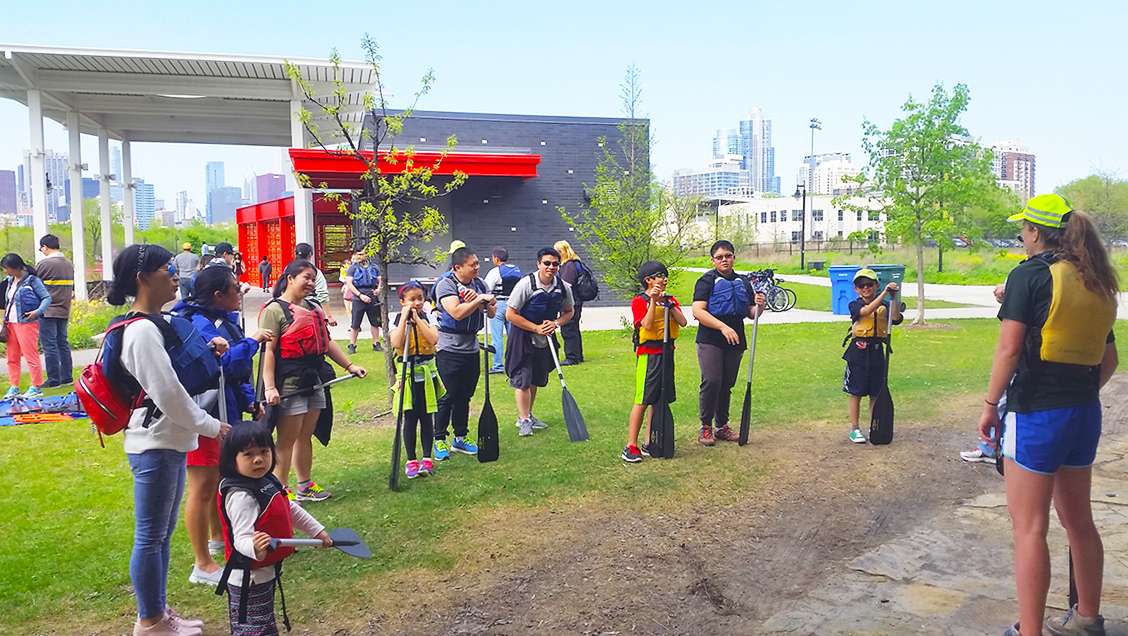
Openlands commenced its first-ever African American Heritage Water Trail Paddling and Interpretation Training internship program, which taught local youth to interpret and confidently paddle along the African American Heritage Water Trail.
Led by Laura Barghusen, Openlands’ Senior Conservation Research Specialist at Openlands, former Openlander Lillian Holden, and St. Sabina’s Erica Nanton, once per week youth were trained to paddle down the Little Calumet River, followed by lessons on the history of the region, environmental justice, and public speaking to master trail interpretation while assisting with paddling events. During the program, interns educated attendees about the region’s rich history, including the environmental justice movement led by Hazel Johnson, the legacy of the Robbins Airport and Tuskegee Airmen, and the Underground Railroad along the Little Calumet River.
Core Activity: Mapping the Trail and Moments in Time
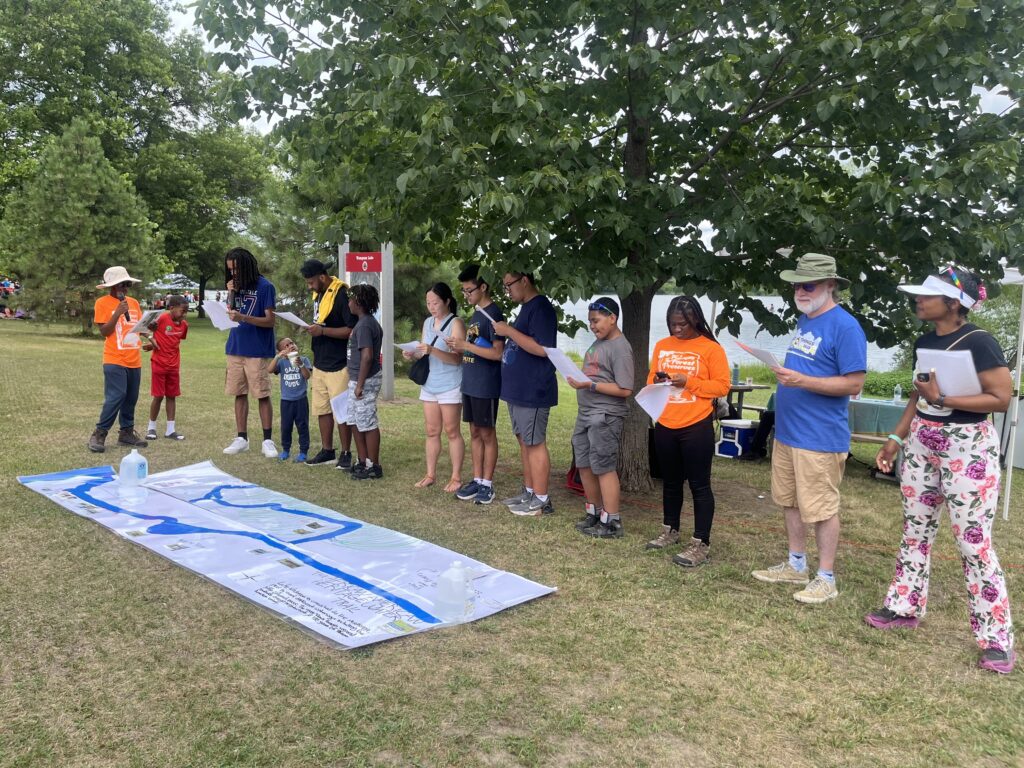
Learners understand the trail as a living timeline shaped by people, land, and water and create a large map of the water trail that can be used to introduce the trail to others.
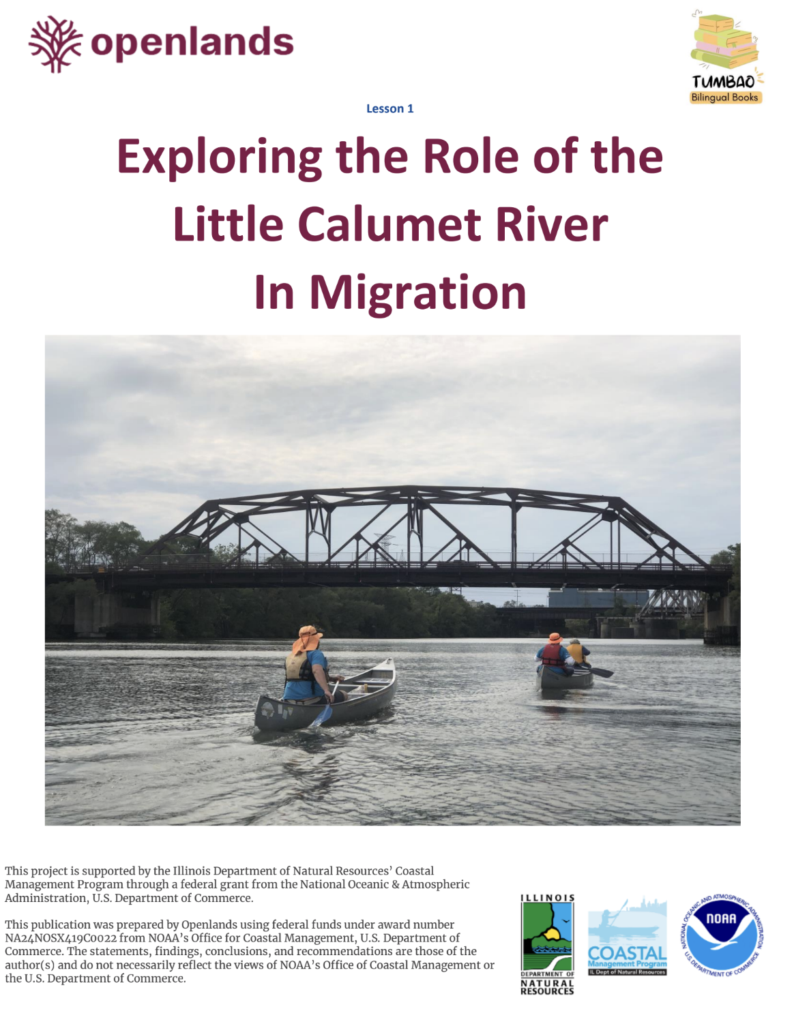
Lesson 1: Exploring the Role of the Little Calumet River in Migration
Learners explore historical uses of river crossings and how natural features influence choices when moving through landscapes. This activity is complemented by use of Enrichment Activity 2: Crossing at the River Bend Readers Theater which explores themes of local Underground Railroad history.
Lesson 2: Community Mapping & Place-Based Identity
Learners investigate clues to reveal past and present cultural, ecological, and historical significance of a landscape through observation, mapping, and discussion. They also consider how maps reflect what is important to those who make them. This activity is complemented by use of either Enrichment Activity 2: Crossing at the River Bend Readers Theater which explores themes of local Underground Railroad history and/or Enrichment Activity 1: Wings Over Robbins Readers Theater about the legacy of Black pilots connected to Robbins.
Learners understand how landscapes, vegetation, and human caused changes reveal stories of the past and present along the Little Calumet River and how these stories reflect community resilience.
Learners explore the cultural, historical, and emotional significance of outdoor and water-based recreation for African American communities along the Little Calumet River, examining how access to water and open space supports joy, healing, and community identity.
Learners investigate native plants, ecosystems, and restoration efforts along the African American Heritage Water Trail, examining how prairies, and wetlands support water quality, wildlife, and community health.
Building on Lesson 5, learners examine aspects of human, animal, and plant movement and migration in relation to the land and water and consider ways to protect environments, ecosystems, and water systems.
Learners explore foundational ecological concepts and gain an understanding of invasive species, prairies, soil health, and restoration goals. They consider presettlement land cover vs. current land cover.
Learners examine environmental justice history, with emphasis on Hazel Johnson and People for Community Recovery. They explore pollution pathways, watershed injustice, and how restoration and community action protect people and ecosystems.
Learners learn what a watershed is, how water moves across land, how ecosystems filter water, and how human activities influence water quality. This lesson includes hands-on modeling and watershed flow simulations.
Lesson 10: Watershed Health & Community Solutions (Part 2)
Learners apply knowledge from Lessons 7–9 to analyze watershed health indicators, flooding risk, and restoration strategies. They role-play as community decision-makers, designing evidence-based watershed and EJ solutions.
As innovative protectors and stewards of the land since 1963, Openlands exists to create access to nature for all. Through local alliances, forward vision, and persistent action, Openlands connects and leads conservation work, serving as a guiding voice for communities, organizations, and more effective policy in northeastern Illinois and the surrounding region.