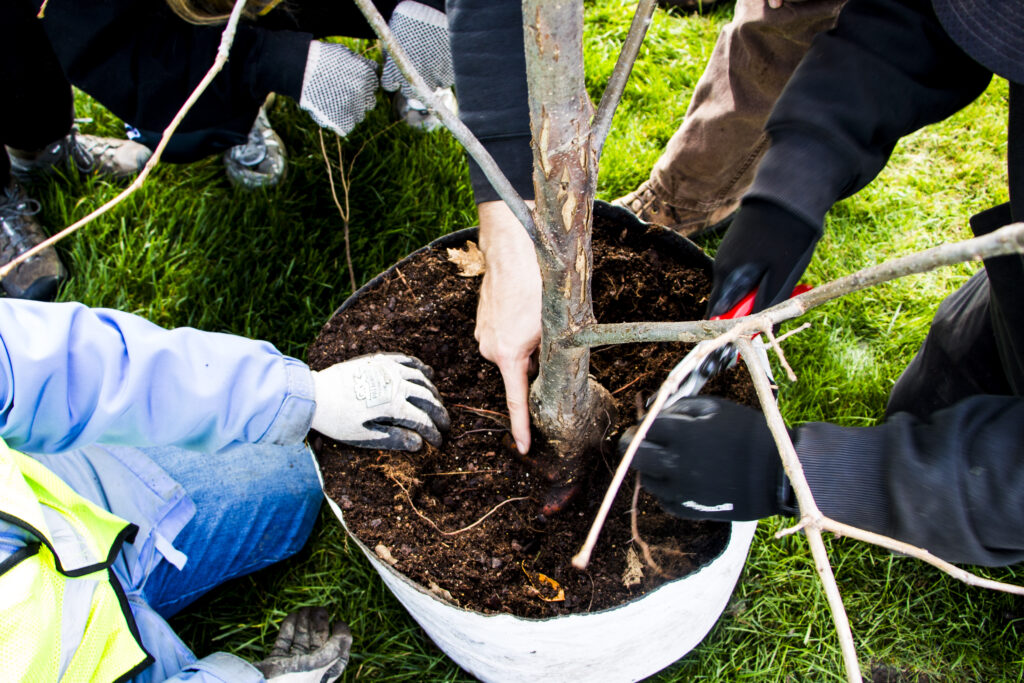
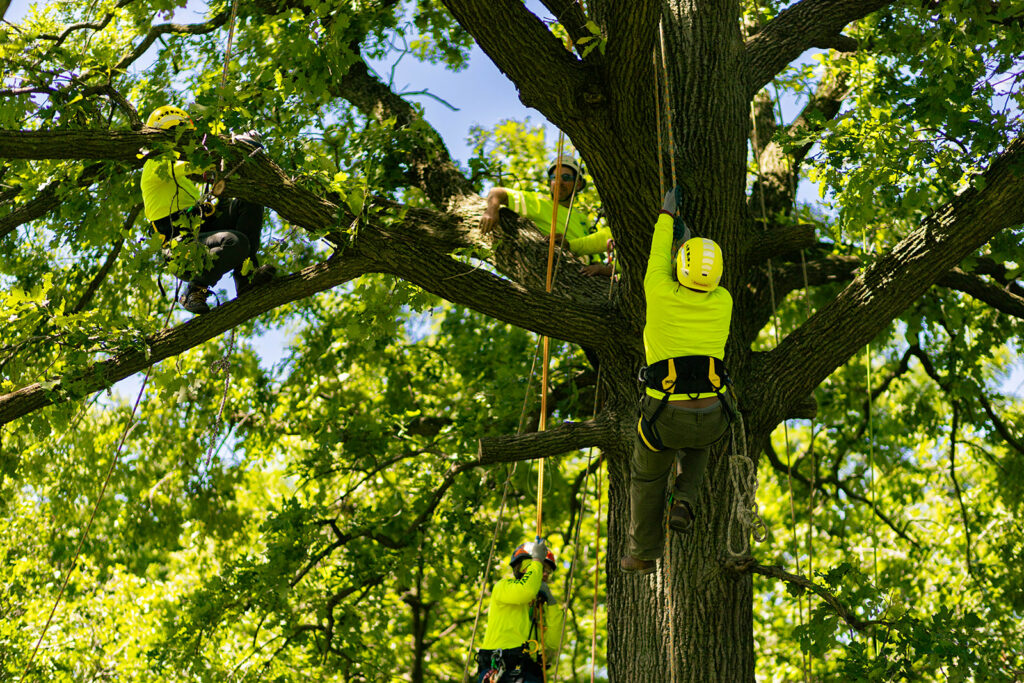
The Arborist Registered Apprenticeship (ARA) is a three-year, Department of Labor-approved apprenticeship that creates entry-level opportunities into arboriculture while building the skills, knowledge, and professional competency needed to succeed in the tree care industry.
Professional Training
Arborist Registered Apprenticeship (ARA)
Openlands partners with regional tree care employers to provide paid, on-the-job training in urban forestry, arboriculture, and plant healthcare. Apprentices develop technical skills through structured work experience paired with their day-to-day work.
As of 2026, the Openlands Arborist Registered Apprenticeship program has reached key milestones:
33 apprentices enrolled
5 apprentices completed the three-year program
5 apprentices received their ISA certifications
8 participating regional employer partners
Pre-apprenticeship program launched in 2025
These outcomes reflect sustained apprentice engagement and strong employer support, while also highlighting the long-term investment required for a successful Registered Apprenticeship Program.
Program Overview
3-year paid training program
5,400 hours of on-the-job training
400+ hours of classroom instruction
Full-time (35+ hours/week) with benefits
Structured pay increases every 6 months
Certifications & Experience
First Aid/CPR certification
Openlands TreeKeeper certification
Commercial driver’s license
Illinois pesticide applicator license
Tree climbing and equipment operation
Planting, pruning, and maintaining trees
Urban forestry and arboriculture fundamentals
Minimum Requirements
18 years or older
Valid Social Security card
High school diploma or GED
Valid driver’s license with a clean record
Proficiency in reading, writing, and speaking English
Ability to perform physical job requirements, including lifting 50 lbs
Benefits for Employers
Access a pipeline of trained professionals or grow an existing team through structured apprenticeship and workforce development programs designed to meet real industry needs. These programs build technical competency, safety awareness, and standardized skills through a combination of hands-on experience and industry-aligned training.
Employers may benefit from financial incentives, such as tax credits, wage subsidies, and training vouchers, that help offset the costs of hiring and upskilling staff. Participation can also position businesses to submit more competitive bids by demonstrating a commitment to qualified staff, industry standards, and high-quality outcomes.