Over the past year, our public lands and the wildlife that call them home have been left increasingly vulnerable by the federal government.
Federal funding freezes, mass layoffs, rollbacks of environmental protections, efforts to privatize public lands, and an unprecedented government shutdown have all sought to undo years of progress and leave our beloved natural areas vulnerable to pollution, development, and reduced access.
But throughout 2025, Openlands has been challenging these destructive efforts. And there are ways you can speak up and be a force for nature.
Protecting our wetlands
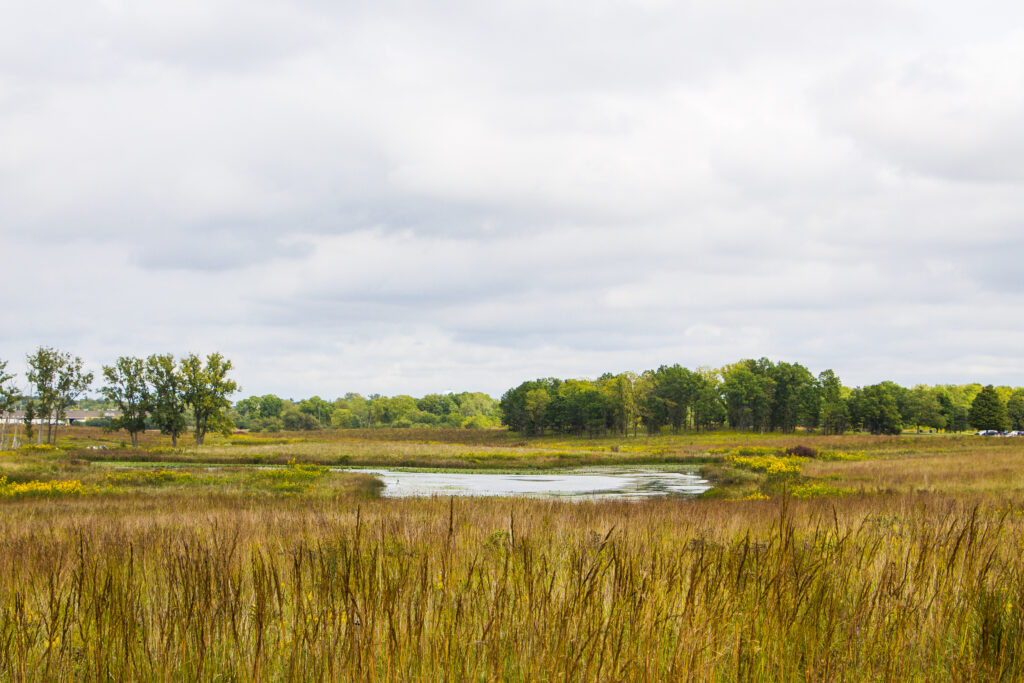
Wetlands are some of the most extraordinary landscapes in Illinois. They filter our water, shelter wildlife found nowhere else, protect our communities from flooding, and offer some of the most beautiful and quietly wild places in our state. Yet only about 10 percent of Illinois’ original wetlands remain.
Now, a new rule proposed by the Trump Administration would strip protections from as much as 72 percent of the wetlands we have left. That would leave countless acres of vital habitat and natural water filters vulnerable to development and destruction.
Illinois has a chance to do better. Openlands is part of a broad coalition of conservation organizations advocating for state legislation (SB2401 / HB3596) that would restore the protections our wetlands need, but we need more public support to move them forward.
Take action and tell Gov. Pritzker that Illinois must step up where the federal government is stepping back. Our wetlands are too valuable — for clean water, for biodiversity, for flood protection, and for the wild places that make this state home — to lose them now.
Protecting our forests
America’s private forests are disappearing at an alarming rate—37 million acres could be lost by 2060, an area the size of Illinois. These forests provide clean drinking water for 30% of Americans, store carbon to fight climate change, and support 2.5 million jobs. Yet, development pressure threatens to convert these lands away from forest use.
The Forest Conservation Easement Act (H.R.3476 / S.1050) offers a solution: voluntary land protection agreements, know as “conservation easements“, that keep forests intact while allowing landowners to continue working their land. Without this program, we risk losing critical wildlife habitat, carbon storage, and rural economic stability.
The Openlands policy team has advocated for members of the Illinois Congressional Delegation to support the Forest Conservation Easement Act and ensure it is included in the Farm Bill with Mandatory Funding during the Land Trust Alliance’s Advocacy Days in Washington, D.C., but only a single member of our delegation, Congressman Raja Krishnamoorthi, has signed on as a co-sponsor.
Help us gain more co-sponsors and reach out to your U.S. Representative to urge them to support this critical legislation.
Protecting threatened and endangered species
The U.S. Fish and Wildlife Service (USFWS) is the principal federal agency tasked with the conservation, protection, and restoration of fish and wildlife resources. Congress recognized how important wildlife was to the people of the United States when it passed The Endangered Species Act of 1973 (ESA), which is credited with helping save the bald eagle.
The ESA is the foundation for conservation and protection with a stated purpose to:
“Provide a means whereby the ecosystems upon which endangered species and threatened species depend may be conserved, to provide a program for the conservation of such endangered species and threatened species. . .”
Unfortunately, despite this clear intent, the USFWS is proposing to weaken the Endangered Species Act. Examples of ways the ESA would be weakened under the proposed rules include:
- Eliminating the “blanket rule” which allows the USFWS discretion to give threatened species the same legal protections as endangered species.
- Allowing officials to consider the economic impacts or other impacts when deciding whether to list a species for protection.
- Making it easier for USFW to delist (remove protections) for a given species.
Openlands is strongly opposed to these changes as we believe they move us in the wrong direction during a time when we are witnessing widespread biodiversity loss. Openlands has filed extensive public comments opposing these proposed rule changes and encourages to do the same with our action alert before Dec. 22, 2025.