Openlands hosted Opentalks in May 2026 at The Driehaus Museum in downtown Chicago. The event aimed to deepen our supporters’ connection to our local environmental efforts through behind-the-scenes stories shared by our dedicated team of conservation experts. The following is one of those stories.
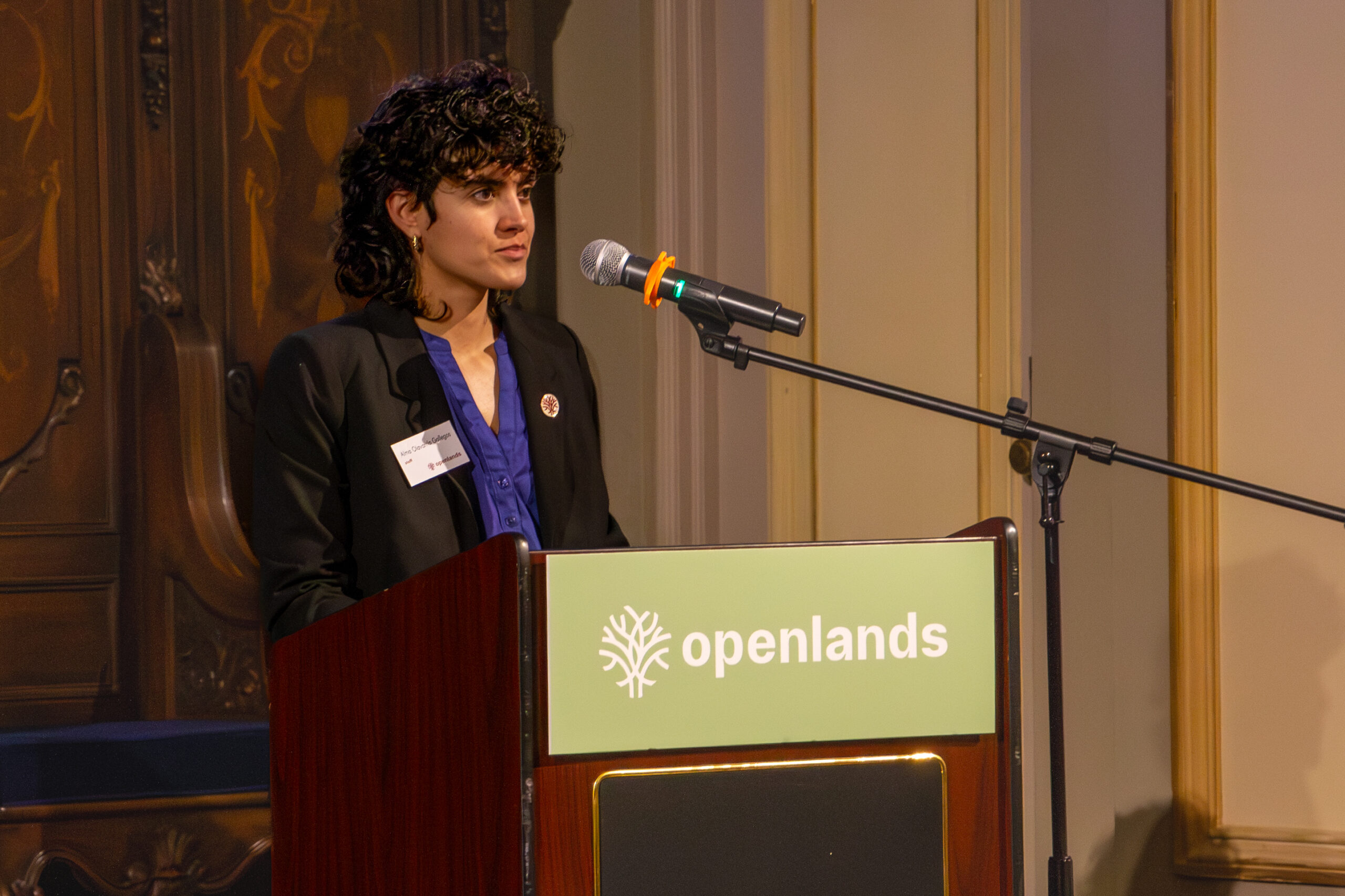
“Good morning. My name is Alma Olavarría Gallegos and I am the Policy Specialist at Openlands. As any of you who have worked in policy may be aware – making policy, making law and changing the law is a long, long process. From drafting new bill language, to getting the right stakeholders and departments on board, to ironing out legalities, to lobbying for support, changing the laws can take years, and generally, the process is not well known for being transparent nor open to the public.
At Openlands, we do policy work at all levels, federal, state, and local; however, today I will be telling a story about the local policy work we do in Chicago. Today, I will be talking about how Openlands is helping break through traditional, hidden policy processes in Chicago, and how we are truly publicly and democratically building policy together from the ground up.
I will start by talking about trees – and Chicago is not quite known for our trees. We have had a struggling tree canopy over the years, even though we know trees are the city’s living infrastructure and our canopy provides multiple environmental, health and economic benefits. Trees filter our air, reduce flooding, and protect us from heat. In Chicago, we also have inequitable tree coverage, so neighborhoods that were historically redlined also had less trees planted and maintained. Now, those neighborhoods struggle from worse impacts of heat and flooding.
”It was incredible to see so many citizens gathered to speak about the importance of trees. And it wasn’t just once or for the first meeting. Every time this Board meets, TreeKeepers are there.”
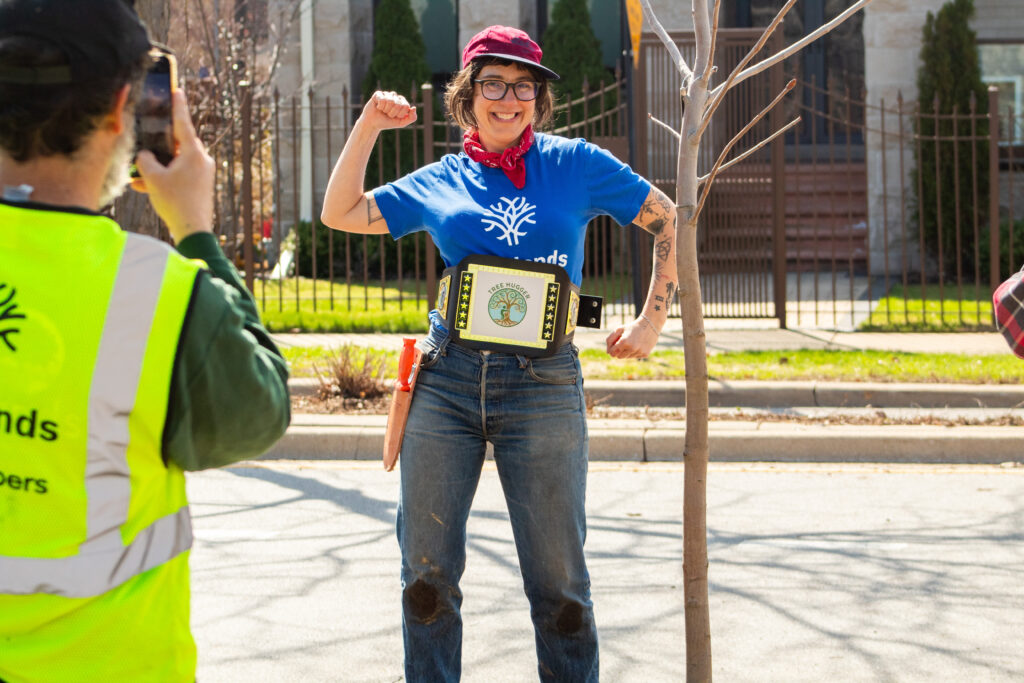
When I joined Openlands a few years ago, I was fortunate to step into an Openlands that was teaming with the energy of hundreds of volunteers, all passionate about trees. Many called themselves TreeKeepers. At first, I was a little confused – I had never seen so much excitement about trees before. But then I took a training course that Openlands offers – it is called our TreeKeepers course.
In this course the students learn about the importance of trees, and I understood the enthusiasm I saw. This course makes us so passionate by providing knowledge and community. For instance, I learned there that one typical medium-sized tree can intercept more than 2,000 gallons of rainfall per year!
To me it is so cool to learn about living infrastructure, but I was not the only one impacted. Openlands has trained many TreeKeepers – some of whom are in this room. And it was with this network of TreeKeeper volunteers and their support that Openlands had helped pass an Ordinance that created a City of Chicago Board dedicated to our trees. It is called our Chicago Urban Forestry Advisory Board.
“It was incredible to see so many citizens gathered to speak about the importance of trees. And it wasn’t just once or for the first meeting. Every time this Board meets, TreeKeepers are there.”
So, what is an Advisory Board? It is a Board with experts that recommend both legislative and internal changes to positively impact Chicago. After some years of delay, as with all bureaucracy, the Urban Forestry Advisory Board that was passed with TreeKeeper support, started hosting its initial meetings a few years ago. On the Board we had all the required parties – forestry experts, like Openlands staff, along with Chicago’s Bureau of Forestry that manages all public trees, the Chicago Park District that manages public trees in our parks, the Department of Transportation that plants new trees in streetscapes, the Department of Planning and Water and Environment and so on. We also are joined by the Alderwoman who is the Chair of the Environmental Committee. This Board set Chicago up to make meaningful change around our Urban Forest.
However, as soon as the first meetings started it was clear that there was another significant presence in the room. Tree advocates from the public came out – and almost all of them were registered TreeKeepers. Those who initially advocated for the creation of the Board turned up to speak about why it is necessary to continue this work. They were vocal about the issues they saw on their streets and tied their concerns about trees to better climate futures, healthier communities, and a more equitable Chicago.
It was incredible to see so many citizens gathered to speak about the importance of trees. And it wasn’t just once or for the first meeting. Every time this Board meets, TreeKeepers are there. Often observations were grounded in examples of specific neighborhoods, pointing to failed projects, injured trees, or asking for increased transparency and more equity in tree canopy.
”It is a transformative space, unlike anything I have seen before, where the public and community are directly involved in discussions about creating and implementing new policies. It has been an incredible experience to work transparently, and it makes me so excited to be able to work with Openlands.”
So, in policy work, traditionally, high public engagement can be seen as a barrier to progress. No one likes to be criticized, especially when there is nuance in projects that is difficult to explain. However, the Urban Forestry Advisory Board was unique in its response to this public energy. We worked to harness the energy present and created subgroups to focus on problem solving some of the key issues.
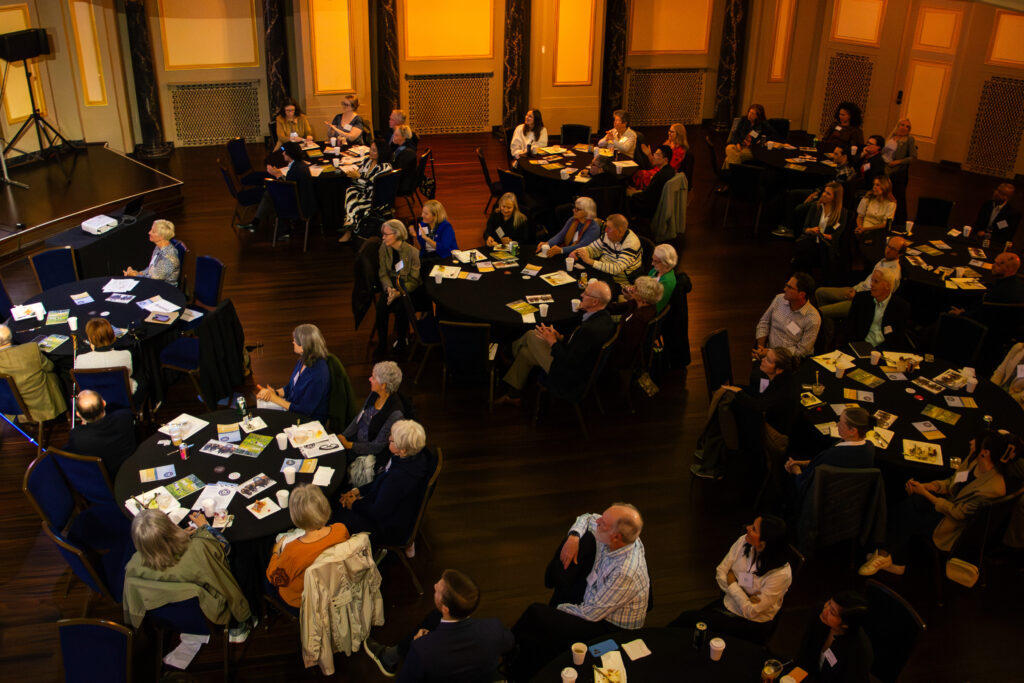
One of the subgroups is the Policy Working Group led by Openlands staff, which is composed of anyone interested–city staff and the public included. In this group we fostered a high level of transparency. Together we identified issues and possible solutions to our urban canopy challenges. City staff took time to explain their internal procedures to the public that was present and suddenly were able to work better cross-departmentally as staff in other departments also learned what each other were doing.
The public volunteers brought forward examples from other cities of possible solutions to explore. With a shared charter, we create collective recommendations around new procedures – like how to protect our largest and oldest trees. We also coordinate efforts to secure increased budget in crucial areas like staffing. The advocates present learned how to best advocate for the funding needed for canopy work.
It is a transformative space, unlike anything I have seen before, where the public and community are directly involved in discussions about creating and implementing new policies. We brainstormed together, defined priorities together, and even presented our recommendations together. It is so transformative that now the Alderwoman is using the structure as a model for the Shoreline Advisory Board, a similar city board. It has been an incredible experience to work transparently, and it makes me so excited to be able to work with Openlands.
You can contact Alma at aogallegos@openlands.org.