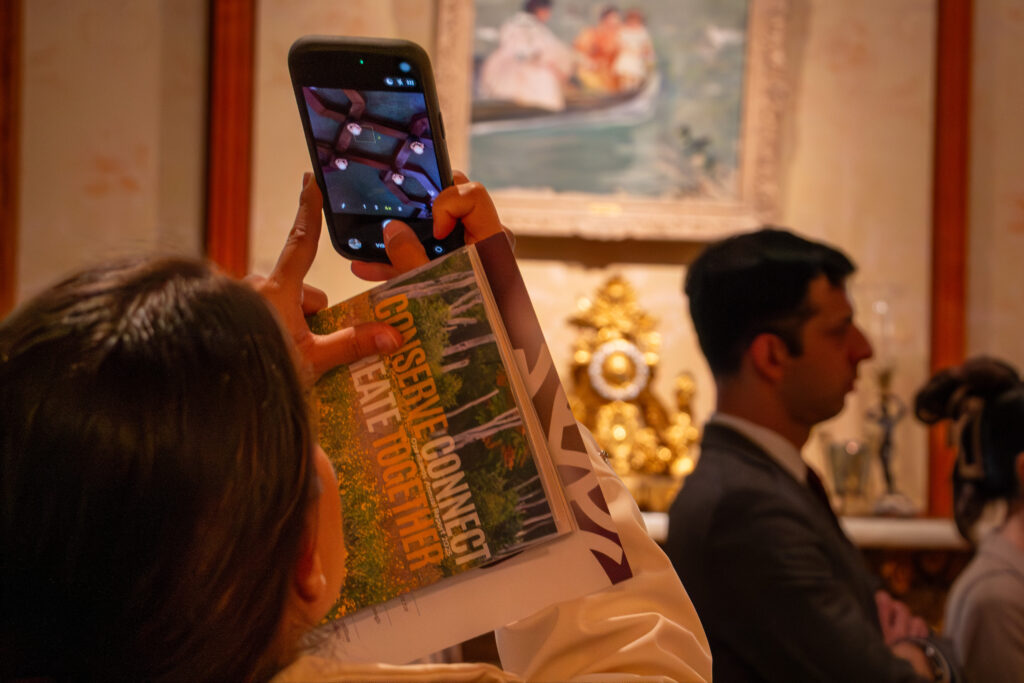
Openlands hosted Opentalks in May 2026 at The Driehaus Museum in downtown Chicago. The event aimed to deepen our supporters’ connection to our local environmental efforts through behind-the-scenes stories shared by our dedicated team of conservation experts. The following is one of those stories.
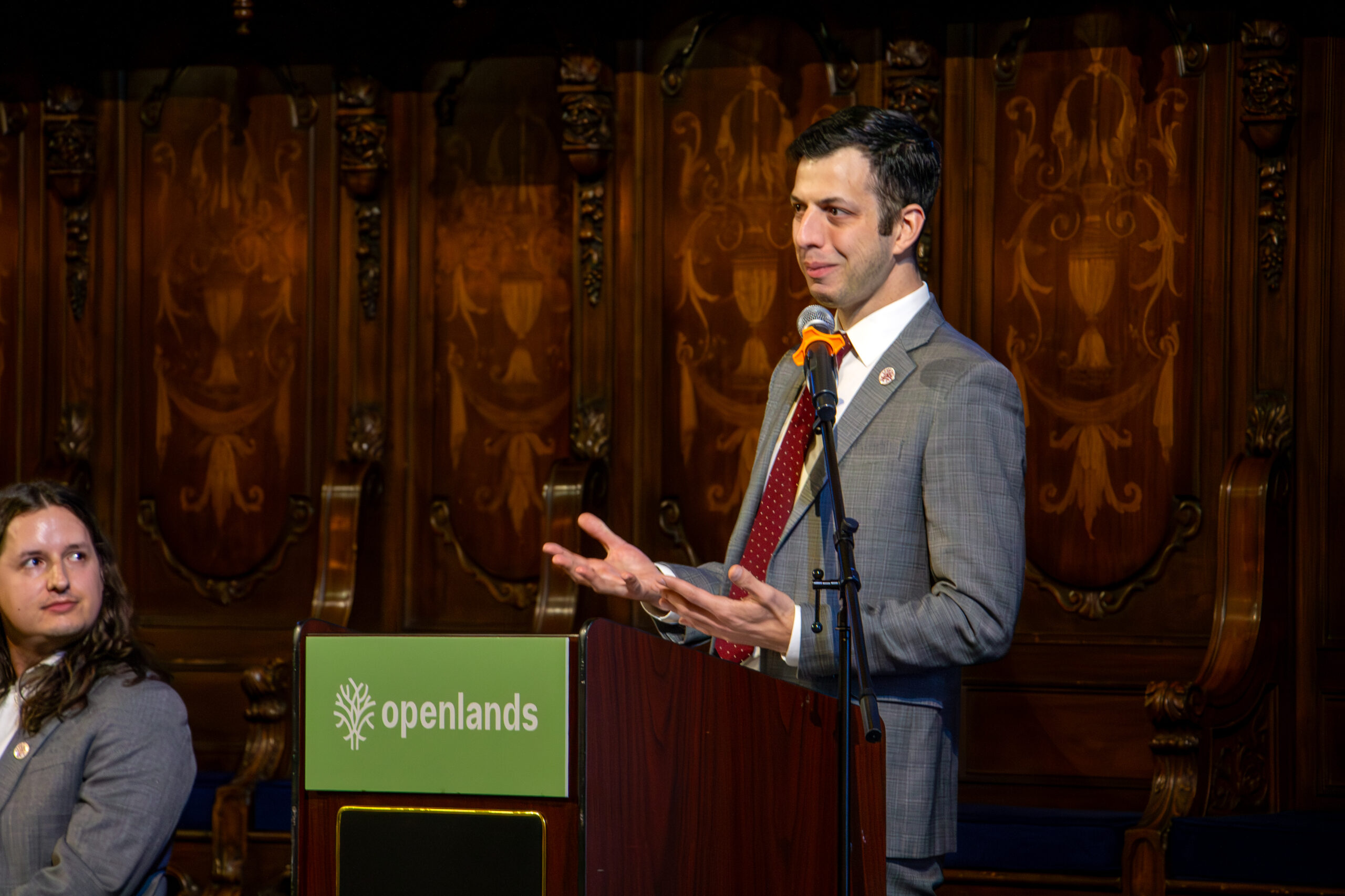
“Hi, I am Chris Kessler, Director of Policy. I work across the organization to lift up community voices and shape policy decisions across all levels of government.
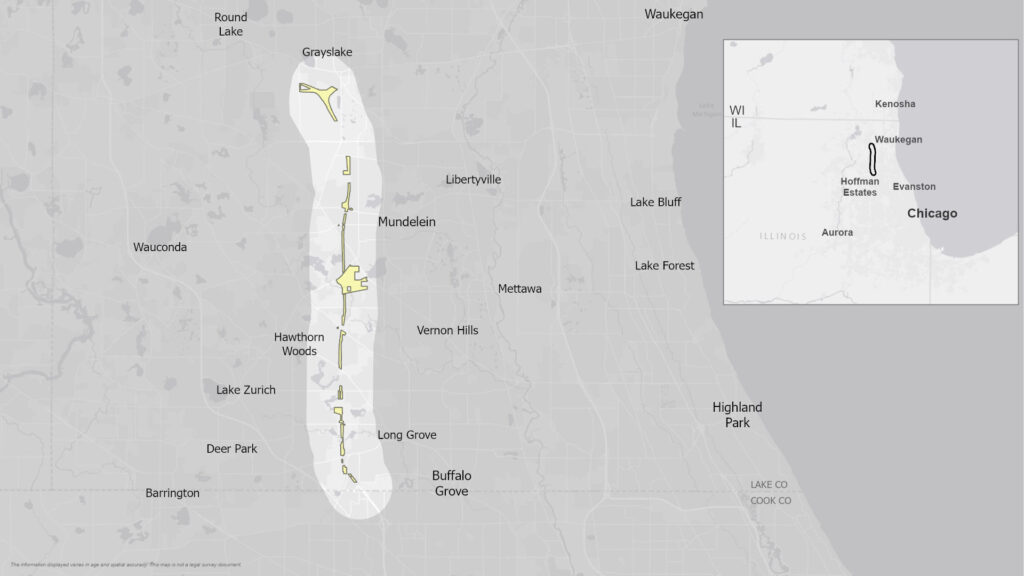
I am going to share a story about the Lake County Greenway Project which as a result of advocacy from the ground up will be situated on land once destined for a tollway through central Lake County. This corridor includes 1,100 Acres of land, which is roughly 750 Football fields, and stretches 12-miles across the communities of Long Grove, Hawthorn Woods, Mundelein, and Grayslake.
Now a Greenway is defined as a corridor of undeveloped land preserved for recreational use or environmental protection–but the Lake County Greenway will be so much more than that. It is land that will be set aside to provide a place for both people and animals to co-exist – an escape from the pressures of development.
Now, this story is close to me. I grew up in Mundelein—one of the communities that the highway project would have divided. In fact, the land I am talking about is literally right down the street from my childhood home, as well as immediately behind the elementary school and high school where I was once a student.
As a child, I longed for being outdoors. I would set out with my friends exploring these lands, playing and fishing in a creek that meandered through woods and wetlands on the edge of the corn field behind our homes.
“[The Lake County Greenway] is land that will be set aside to provide a place for both people and animals to co-exist–an escape from the pressures of development.”
However, this landscape which once felt so expansive, has started to feel much smaller as suburban sprawl has crept in.
Every time I return home my community looks a little bit different. Wetlands, woodlands, and farmlands have slowly been replaced by shopping centers, logistics facilities, and other developments that often bear their names. Yet, despite these continued pressures, the fabled highway that was once planned to occupy these lands has not been built and these lands remain untouched.
Little did I know — long before I joined Openlands or understood what was at stake — the organization had been hard at work fighting to protect this natural area.
“As a child, I longed for being outdoors. I would set out with my friends exploring these lands, playing and fishing in a creek that meandered through woods and wetlands on the edge of the corn field behind our homes. “
Over the years study after study was conducted to analyze the feasibility of this controversial highway project. Every time, Openlands and our community partners showed up – until finally – we achieved what was once thought impossible and it was announced that the expensive and ecologically destructive highway expansion would no longer happen. This hard-earned victory, however, presented a new challenge and question to be answered: If not a road, what was the next highest, best use for this publicly-owned land?
A special legislative task force was convened to answer that question and Openlands — which had been at the forefront of regional land use and policy conversations for nearly 60 years — had a seat at the table alongside local elected officials, community leaders, and environmental organizations.
Through community building and support for one another Openlands and our partners, Green Corridor Coalition and the Illinois Route 53 Land Alternative Use Task Force (THATS A MOUTHFUL), packed board rooms and other community meetings to secure support from local state legislators, mayors, and county board members for a new way forward.
“Every time I return home my community looks a little bit different. Wetlands, woodlands, and farmlands have slowly been replaced by shopping centers, logistics facilities, and other developments that often bear their names.”
Instead of 12-miles of impermeable surfaces, logistics facilities and big box stores, we created an alternative vision for the land with our community partners, reimagining it as a linear nature corridor and amenity for people and wildlife alike. We secured a $1,000,000 line item in the state budget through advocacy, persistence, and the steadfast leadership of members of Lake Counties state legislative delegation to support the new vision and an investment in its future. We worked with stakeholders along the corridor to help them see its value and incorporate conservation-forward elements into privately-owned lands that straddled the corridor. And soon, through steadfast advocacy, we hope to celebrate the land being transferred from the Illinois Department of Transportation to a public land conservation agency to be protected in perpetuity.
“Instead of 12-miles of impermeable surfaces, logistics facilities and big box stores, we created an alternative vision for the land with our community partners, reimagining it as a linear nature corridor and amenity for people and wildlife alike.”
Our work, however, has only just begun.
We will need to continue working to secure transformative investments in this landscape, acquire parcels to close gaps, and ensure the community continues to be part of this process as we seek to connect the people, ecosystems, and landscape the corridor touches.
I look forward to the day when everyone in my hometown can readily experience these natural areas like I once did — where neighborhood children can safely get to school while being immersed in nature — and communities can lean into the corridor that will be shaped by their individual identities.
Ultimately, this story represents how Openlands uses creative problem-solving, persistent advocacy, policy expertise, and community building to advance solutions to some of the most pressing challenges our region faces.”
“I look forward to the day when everyone in my hometown can readily experience these natural areas like I once did — where neighborhood children can safely get to school while being immersed in nature.”
You can contact Chris at ckessler@openlands.org