
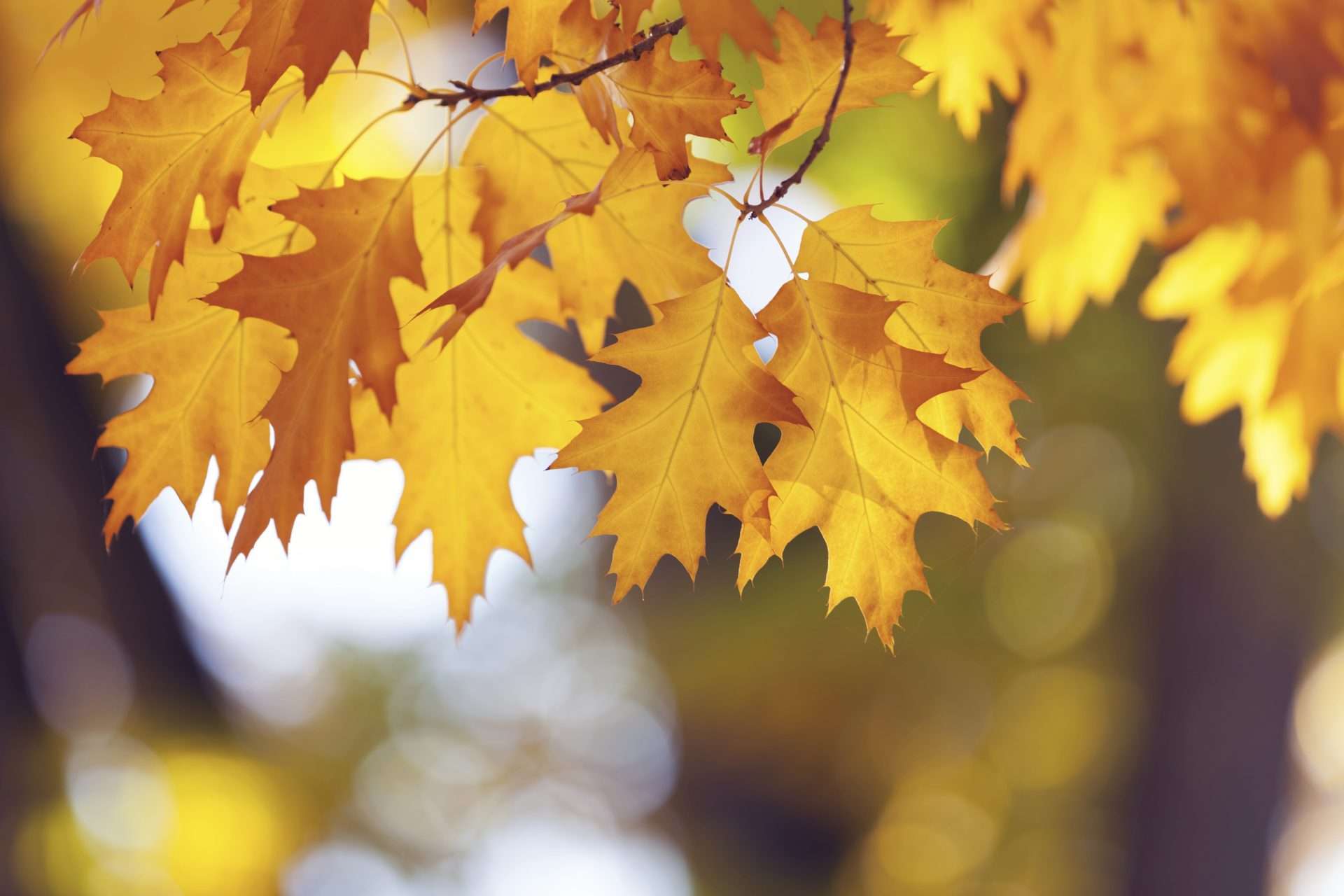
Oaks support much of Northern Illinois’ renowned variety of wildlife and native plants
Trees provide numerous benefits. They purify our air, provide shade, increase property values, and research shows they reduce anxiety. They also absorb large amounts of rainwater and carbon.
As the Chicago Region’s keystone species, oaks provide critical habitat for hundreds of other native species, including butterflies, birds, amphibians, mammals, and more. The few remaining oak groves and oaks woodlands are increasingly fragmented and lack younger trees. Without your help, the future of oaks to support our ecosystems is in jeopardy.
See below for how to plant an oak.
For more good trees to consider: Native Tree and Shrub Guide (pdf)
For greater detail: Oak Ecosystem Recovery Project
Step 1: Select Your Oak
If you have oaks
If a tiny oak sprouted on your property in a spot that is shady or close to a building, driveway, or power lines, transplant it in spring to a better, sunnier spot. (If buckthorn is casting the shade, please instead remove the buckthorn.) First, thoroughly water the seedling, and then dig the hole in the new location. Second, dig up the seedling, protecting its roots as much as possible. If it is already a foot or two tall, dig as deep and wide as you can reasonably handle and wrap this ‘root ball’ in a tarp to protect it while you move it to the new hole. Immediately re-plant with the instructions below.
Additionally, oak acorns can be collected in fall and planted in spring. Place the acorns in water before planting – only plant the acorns that sink as floating acorns may be infected or not mature.
If you buy oaks
To select an oak that will thrive, first pick the spot where you will plant it. It should be quite sunny and well away from buildings, power lines, driveways, and other things a grown tree could eventually interfere with. Then think about how dry or wet this spot can get, especially in spring and summer.
While shopping, consider additional native trees and shrubs that create privacy and shade, soak up rainwater, and beautify your landscape.
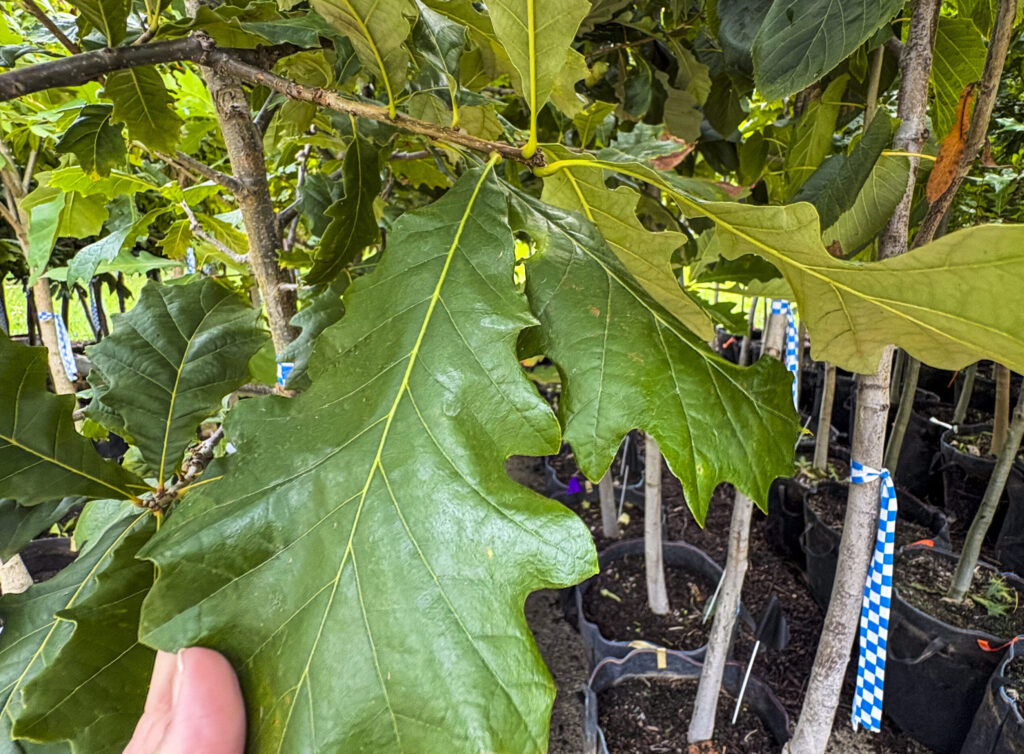
Meet the oaks
White oak (Quercus alba)
- Needs 3-4 hours of sun each day
- Thrives in moist soil, tolerates dry (not good for wet spots)
- Grows in sand and clay (not good in compacted soil)
- Tall – can reach 80 feet
- Can live hundreds of years
- Many leaves stay on tree through winter
- Fall color is reddish-purple
Swamp white oak (Quercus bicolor)
- Prefers full sun
- Thrives in areas that range from moist to flooded
- Tolerates road salt, compacted soils, and heat
- Grows fast
- Tall – can reach 80 feet
- Fall color is yellow, orange, or brown
Scarlet oak (Quercus coccinea)
- Needs full sun
- Grows on sandy and clay soils ranging from medium to dry
- Good for privacy screening when lower branches are not pruned off
- Grows fast
- Short – rarely taller than 65 feet
- Sometimes labelled Hill’s oak (Quercus ellipsoidalis)
- Fall color is beautiful scarlet-red
Shingle oak (Quercus imbricaria)
- Prefers full sun
- Soil moisture can range from medium to dry
- Handles many soil types including clay, gravel, and sand
- Great for privacy screening because leaves stay on through winter
- Short – can reach 50 feet
- Fall color is usually brown, sometimes red-orange
Bur oak (Quercus macrocarpa)
- Requires full sun
- Adapts to many conditions – even clay – and wet to dry spots
- Tolerates road salt, lightly compacted soils, and roadsides
- Grows fast
- Tall – can reach 80 feet
- Fall color is yellow
Chinquapin oak (Quercus muehlenbergii)
- Needs full sun
- Grows in soils that are dry to medium
- Good along streets – tolerates some road salt, drought, and some compaction
- Grows fast
- Tall – can reach 70 feet
- Fall color is orange yellow
Pin oak (Quercus palustris)
- Needs full sun
- Needs wet soil – good for areas that flood
- Medium height – can reach 65 feet
- Fall color ranges from red to yellow to orange
Red oak (Quercus rubra)
- Tolerates light shade
- Grows in soils that are moist to medium
- Grows fast
- Tall – can reach 80 feet
- Fall color an outstanding scarlet
Black oak (Quercus velutina)
- Needs full sun
- Prefers sandy, gravelly, or other well-drained soils
- Tolerates road salt
- Medium height – can reach 70 feet
- Fall color is usually brown, sometimes red
See here for identification guide from the Oak Ecosystems Recovery Plan: Oaks of the Chicago Region
Step 2: Plant Your Oak
Many landscaping companies fail to sufficiently train their crews in how to properly plant trees. Use our instructions as you oversee them or hire a certified arborist to help: www.isa-arbor.com.
- WATER, WATER, WATER the first season. Even the most drought-tolerant trees need a season or two of watering to get their roots established before they can withstand dryness and heat.
- EXPOSE the root flare if it is not visible at the soil surface – this is the slightly swollen spot where the trunk meets the roots. If the root flare is not showing, gently scrape the soil away.
- DIG a hole two or three times wider than the pot or ‘root ball’ and no deeper than the root flare to the bottom of the pot or ‘root ball.’
- REMOVE all packaging including burlap or twine. Be gentle with the roots.
- PLACE the tree in the hole. Fill the hole with soil and tamp down to eliminate air pockets.
- MULCH evenly in a circle two-three inches deep (no volcano shaped mounds), extending as far out from the trunk as the tips of the branches. Leave a gap between the mulch and the trunk – mulch should not touch the trunk or it might lead to disease. Fresh woodchips are not recommended because as they decompose, nutrients are pulled away from your plant.
- ENCIRCLE the tree with a wire cage for its first few years if deer or rabbits are an issue.
Step 3: Care for Your Oak
Many landscaping companies fail to properly train their crews in how to properly mulch, water, and prune trees as well as how to identify and treat diseases. Find a certified arborist here: www.isa-arbor.com.
WATCH for disease. These are tricky, so when in doubt, bring in a certified arborist.
WATER one inch per week (about 15 gallons) the first year and whenever there is a drought. During a week of heavy rain, no watering is needed.
MULCH annually as instructed above. Expand the mulch circle as the tree grows to protect it from lawn mowers and weed whackers that frequently damage trees.
LEARN how to prune young trees or hire a certified arborist to provide this important service. Fixing problems with small trees is far easier than with large trees.