
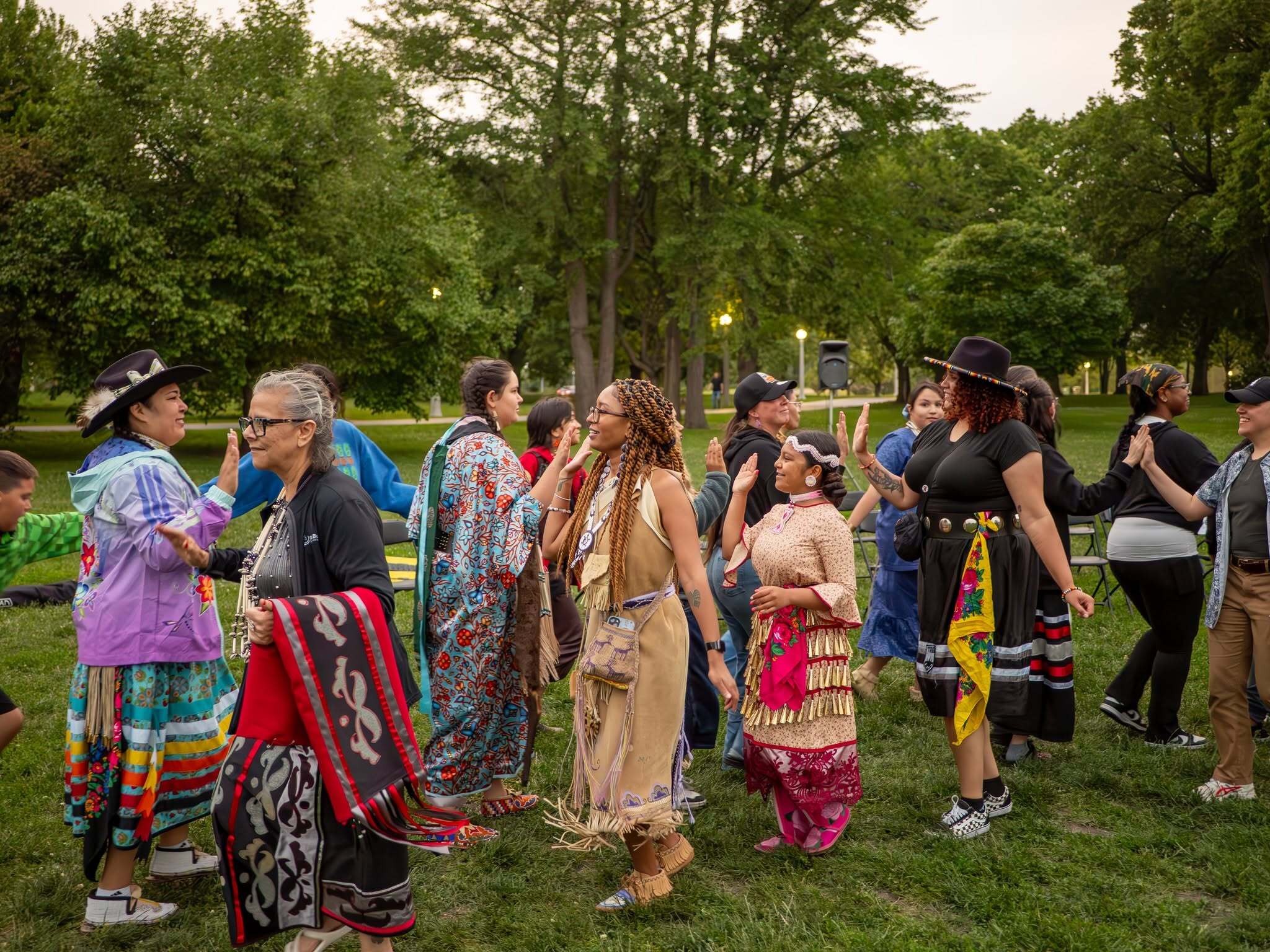
The 6 acres acquired from Openlands establish a space for cultural practices for the diverse members and tribes of Chicago’s Native community
FOR IMMEDIATE RELEASE
Media Contacts
Jay Young, American Indian Center of Chicago
jay.young@chicagoaic.org
Michael Kamp, Openlands
mkamp@openlands.org
(312) 863-6250 ext. 6301
CHICAGO, IL – (October 28, 2026) The American Indian Center of Chicago (AIC) has acquired 6 acres in McHenry County, creating a dedicated place where Chicago’s Native community can gather, practice land-based traditions, and host cultural and educational programming. Acquired in August, the property is protected by a conservation easement held by Openlands, ensuring its natural character will be conserved while AIC owns and stewards the land for its community. Located within the boundaries of the Hackmatack National Wildlife Refuge, the property includes prairie, oak savanna, and frontage along Nippersink Creek.
For Chicago’s Native community, access to parks and natural areas is not the same as having a place where the community can practice its own land-based traditions. On land owned by others, activities such as gathering, foraging, planting, and growing may be restricted or require permission. Ownership gives AIC a place where the community can determine how it gathers, practices traditions, and deepens its relationship with the land.
“Our identities as Native folks, or Indigenous folks more broadly, are tied to land,” said Jay Young, Executive Director of the American Indian Center and enrolled citizen of the Citizen Potawatomi Nation. “I hear that from my clan teachings. I hear that from my ceremonies. I hear that from my songs. I hear that from my language. I hear that from my foodways. Everything ties me to land.”
For Young, that connection has been difficult to fully practice in an urban environment. “My connection with land in the city is more theoretical – something that we talk about and not actually practice,” Young said. “We need a place that we can bring our community to and not ask for permission to do any of our land-based practices.”
AIC and Openlands began building a relationship in 2024, eventually leading Young to work with Openlands’ land preservation team to identify properties that could meet AIC’s needs. After visiting several potential sites, AIC selected the Woodstock, Illinois, property for its proximity to Chicago and the diversity of the land itself. The purchase was supported by a grant from the Prairie State Conservation Coalition and matching support from an anonymous foundation.
AIC has plans to purchase a 15-passenger van to transport urban community members to the site. With its diversity of ecosystems and plant life, Young envisions the site providing opportunities for the many tribes represented in the region to practice their distinct land-based traditions.
Currently, AIC is creating a comprehensive community science program and accompanying workshops for the site. A large learning lodge will provide a home base for the programming, including the food as medicine program and lessons on Traditional Ecological Knowledge (TEK).
In December 2025, AIC worked in partnership with the Forest Preserve District of Kane County to return bison to the landscape at Burlington Prairie. Seven bison roam a recently expanded area of 90 acres. Located just 30 minutes apart, the two sites can be incorporated into a single day of programming for Chicago’s Native community.
AIC’s vision for the property extends beyond programming to the stewardship of the land itself. AIC plans to jointly develop a land management plan with The Morton Arboretum, building on their existing restoration partnership. “We’ve been teaching this with Morton. Western science is great and so is Traditional Ecological Knowledge. They don’t compete with each other; they work well side by side,” says Young.
“AIC’s mission and goals closely align with Openlands’ commitment to protecting land and strengthening the relationship between people and nature,” said Matt Ruhter, Senior Counsel and Director of Land Preservation at Openlands. “This property is special for its mix of prairie and oak savanna and its frontage along Nippersink Creek, and for its place within the Hackmatack National Wildlife Refuge landscape. We are honored to have helped AIC secure a place where its community can practice traditional land stewardship and build a lasting relationship with the land, while ensuring the property’s natural character is protected for generations to come.”
Ultimately for Chicago’s Native community, these 6 acres represent a place of their own and a place of possibility.
“What makes it special is that we actually have a place for the Chicago Native community to come and be Native and practice our ways of being and being in a relationship with the land without asking for permission,” says Young. “Our community now has a place to go.”
###
About the American Indian Center
Established in 1953 during the federal termination and relocation era, the American Indian Center of Chicago is one of the oldest urban Native centers in the country. Celebrating its 73rd year, AIC is a Native-led organization serving Chicago’s Native community through cultural programs, education, arts, community meals and support for elders. Our food sovereignty and land stewardship work brings community members together to grow food, care for the land and share knowledge across generations. AIC provides space for people from many Native nations to gather, maintain cultural connections and take an active role in the life of our community.
About Openlands
Founded in 1963, Openlands protects the natural and open spaces of northeastern Illinois and the surrounding region to ensure cleaner air and water, protect natural habitats and wildlife, and help balance and enrich our lives. Openlands works across areas to advance nature-based solutions to climate change, improve the health and well-being of communities, and create a more verdant region for all.