Trails and access to natural spaces are not shared equally across our country. Even with nearby natural spaces, community members can feel that the spaces are not for them. Take, for example, the Calumet Region on the South Side of Chicago. This feeling did not happen overnight: decades of disinvestment led to physical and mental barriers between residents and their natural assets, such as the Little Calumet River and Beaubien Woods Forest Preserve. Communities just blocks from the waterway lacked access to the river because it was impeded by industry, invasive species, and a shortage of public open space.
Together with community members and local partners, Openlands is helping reconnect people to the Little Calumet River through restoration, improved trail connections, reliable transportation, and cultural interpretation like the African American Heritage Water Trail (AAHWT). Established in 2020, the AAHWT is part of a place-making initiative to improve community wellbeing and protect natural habitats. The AAHWT was in many ways inspired by the broader Little Calumet River Conservation Action Plan, which identifies priority sites for protection, ecological restoration, and for connecting communities to the surrounding landscape.
How to create a welcoming and meaningful space
Trails can create welcoming spaces. Trails connect us to the natural world, the landscape underneath, and the people who took the trail before us. The 7-mile AAHWT begins at Beaubien Woods on the Little Calumet River and flows west to the Village of Robbins on the Cal-Sag Channel. Besides showcasing the natural beauty of the region, the trail passes important cultural and historic landmarks, such as the Ton Farm – a stop for freedom seekers navigating the Underground Railroad.
To provide access to the AAHWT, there are four boat landings spread over the trail. An additional focus is restoring native habitats, emphasizing areas previously overrun by dense shrubs blocking direct access to the river. Beaubien Woods, the eastern end of the AAHWT, has undergone many restoration efforts, including the removal of invasive species, such as buckthorn, honeysuckle, and teasle.
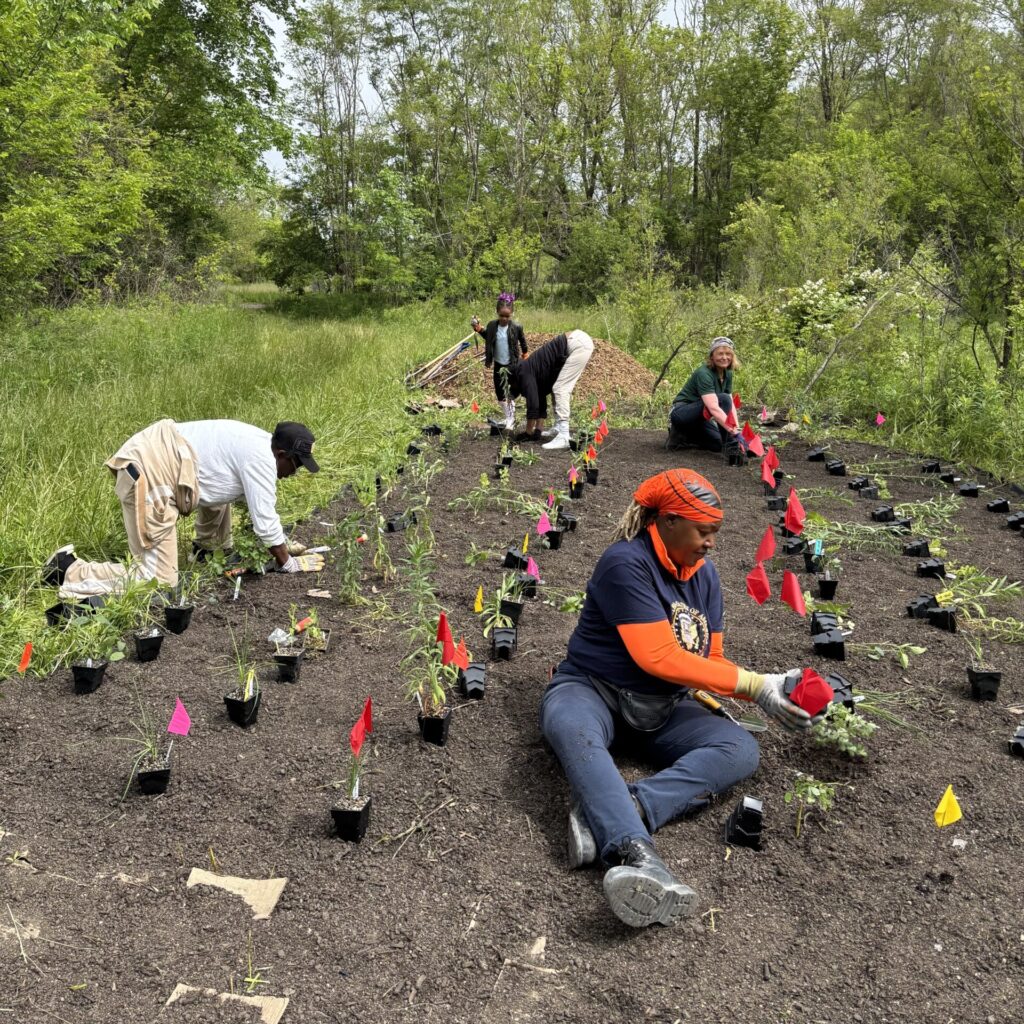
Restoration efforts are also taking place inside neighborhoods. Just steps from the river, Openlands and partners, including Altgeld Murray Alumni, the Field Museum, and People for Community Recovery, planted a native garden at a new NeighborSpace acquisition. Serving as a community gathering space, the garden is based on the design that students at Aldridge Elementary created with Collective Learning Lab for a Hazel M. Johnson memorial garden, a past neighborhood resident considered “Mother of the Environmental Justice Movement.”
Future work along the AAHWT includes continued restoration of natural areas, improving existing community green spaces, creating new community green spaces, and further improvements to visitor infrastructure, such as accessibility improvements. Currently, a community signage project is underway to highlight community assets in Beaubien Woods and surrounding neighborhoods.
The AAHWT is not just about connecting the landscape but connecting people to each other over shared community assets. Openlands approach includes combining restoration, capital infrastructure, and cultural storytelling to ensure that residents have access to recreational opportunities on regional trails. In short, everyone should have access to nature in their neighborhood.
Exploring the African American Heritage Water Trail
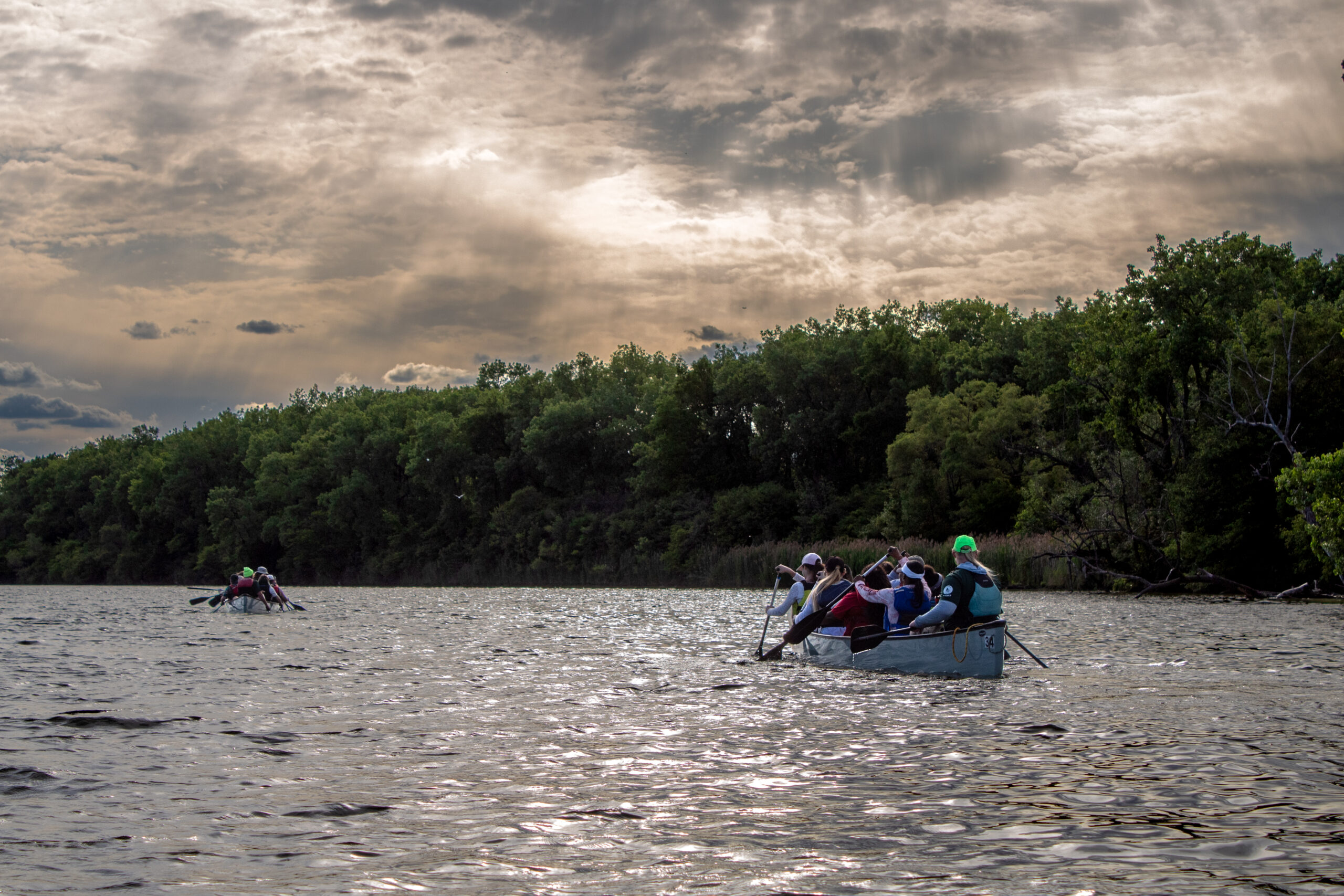
Back on the water, anyone can paddle the AAHWT, though this water trail is recommended for expert paddlers because it is a wide and deep channel with boat traffic. However, certain connecting sections are great for beginners, like starting at the canoe and kayak landing in Kickapoo Woods, which is on the smaller and more naturalized part of the river.
Events are held on the AAHWT that provide expert paddling guides and watercraft for curious paddlers without a boat, or beginners who want to explore the large channel. In 2026, monthly organized paddles led by Chicago Adventure Therapy, the Forest Preserves of Cook County, and Openlands brought together community and celebrated the history of the trail.
For visitors wanting to learn more, Openlands, Tumbao Bilingual Books LLC, and Wayfinding LLC developed a curriculum inspired by the local community. The curriculum covers topics from watersheds to restoring native habitats as well as local perspectives on the people, places, and stories that continue to define the Calumet Region. There is no shortage of lessons or stories about this special place.