
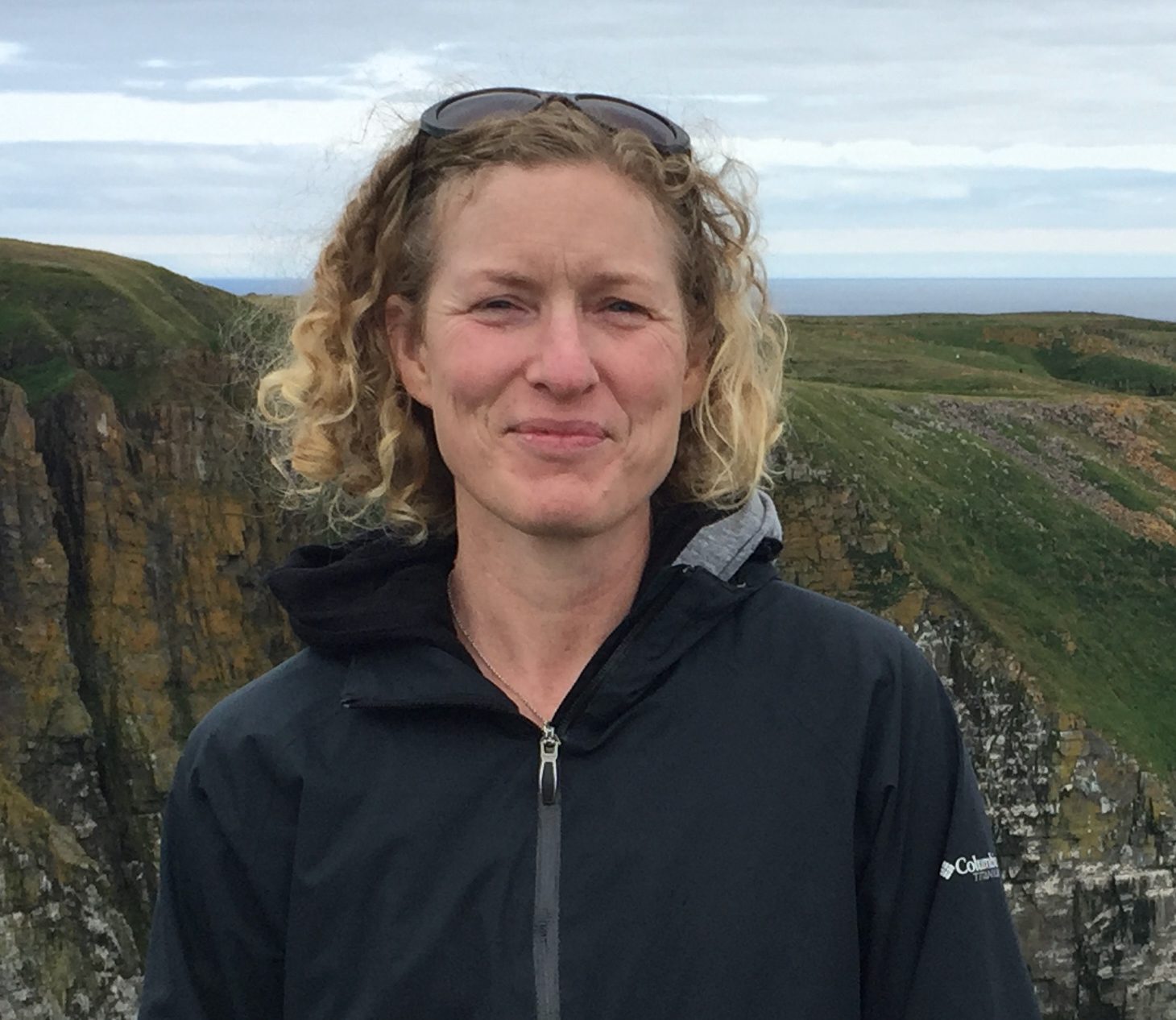
The 2026 Openlands Annual Luncheon will bring together science, storytelling, and poetry to explore our relationship with the natural world. On October 21st, Dr. Tessa Francis will deliver the keynote address, drawing from a career spanning the University of Washington, multiple government agencies, and her current role as the Deputy Director of The Nature Record.
The Luncheon will also feature poet Kimberly Blaeser, a contributor to The Nature of Our Times, a companion poetry anthology to The Nature Record.
The Nature Record began as the National Nature Assessment, a federal initiative launched in 2022 to produce the first comprehensive assessment of the state of nature in the United States. In January 2025, just weeks before the first draft was due, the federal government canceled the effort. But the scientists involved believed the work was too important to abandon. With support from private funders, the effort moved outside the federal government and is now led by The Nature Record, a nonprofit organization.
Ahead of the keynote, Dr. Francis answered the questions below about her work leading The Nature Record and what it can teach us about our connection to the world around us.
For those who are just learning about The Nature Record, could you give a brief summary of this effort?
The Nature Record is a national initiative, focused on raising the profile of nature in the U.S. through knowledge, storytelling, and public participation. Our flagship product is the U.S. Nature Assessment, which is the first-ever holistic national assessment of the state of nature in the U.S. and its Territories – lands, waters, wildlife, biodiversity, and ecosystems, the relationships they support, and the benefits they provide, including connections to the economy, public health, equity, climate mitigation and adaptation, and national security.
Why is this first-of-its-kind assessment important? How will this information be used?
Nature is critically important in all aspects of our lives, even in ways many of us have never thought about. We can all see that nature is changing around us. We can observe it with our own eyes, in the places where we live and work. There are a lot of choices, actions, and decisions to be made that affect nature, that will determine the future direction of nature in the U.S., and how it will affect all of us. Those decisions need to be informed by the best available knowledge we have, and that information needs to be available, accessible, and presented in a holistic way. We need one-stop-shopping on the latest and greatest about nature in our country. And so far, that doesn’t exist. That’s where The Nature Record comes in.
What was the process of shifting from a government-led assessment to an independent effort? How did the team make the transition?
We were so fortunate to have a host of strong supporters, who shared our belief about the importance of this work, and who shared our commitment to seeing it through to completion. That support has come in the form of over 170 volunteer authors, a crack team of technical editors and graphic designers, the National Academies of Science, Engineering, and Medicine, our leadership, our staff… and yes, private funders who really stepped up and continue to step up to ensure we get this Assessment completed, and that it has maximum reach and impact. Our Director, Phil Levin, and I were lucky enough to have retained affiliations with the University of Washington, which became the logical home for our staff.
There can be a lot of doom and gloom in the news about nature and climate change. I see there’s a Chapter called “Bright Spots” in the report. Could you preview a few “Bright Spots” here in Illinois and/or the Midwest?
This is where I need to offer the disclaimer that none of our findings are final yet, not until the full report is released in December of this year. That’s not me being coy, that’s me adhering to the highest scientific rigor and information quality standards around. We won’t release any findings until they have been thoroughly reviewed and evaluated and meet the gold standard for scientific assessments. Having said that, in the draft that was released for public comments earlier this year, there is a shout-out to Chicago’s green roof program, which has led to more than 500 vegetated roofs, 13 rooftop farms, and 5.5 million square feet of green roof! Do you know the program? Maybe you live or work under one of those green roofs!
What communities did you engage with for this report? How many scientists are involved and from how many different states?
One of the things I am most proud of is our extensive public engagement. From the genesis of this initiative, we wanted to make sure that the final product resonated with people from all walks of life. Even our initial scoping was based on talking to communities: Tribal Nations, farmers, fishers, educators, young people – asking them what nature means to them. Since then and up until today, we have engaged with thousands of people from hundreds of organizations to help shape The Nature Record. And all of them care deeply about nature. Our team of authors are the real engine behind the effort, however. Over 160 authors from 40 states and Puerto Rico are writing this report.
I wanted to ask about the companion poetry anthology, The Nature of Our Times. How does poetry about America’s lands and waters support The Nature Record? Why is it important to bring in this arts and culture perspective?
We know that connecting with people’s brains is only one way to have impact. We also need to connect to people’s hearts. And the arts in general are how we do that. We were lucky enough to partner with the Wick Poetry Center and Poets for Science, who have been connecting poets’ voices to science long before there was a Nature Record, to produce The Nature of Our Times, an anthology of poems about nature that is a companion to the Assessment. It’s full of beautiful voices, poets adding their perspectives about nature, how it’s changing, and why it matters. It’s powerful. We also partnered with Bow Seat, an environmental youth program for the creative arts, who ran a youth art contest as a companion to the Nature Record. We hope to include some of those pieces in the final Assessment product, adding those youth artists’ voices to the story of nature.
If there is one takeaway from The Nature Record, what would that be?
Nature matters to everyone, in countless ways. Nature unites us. And nature is changing. If we can understand how, where and why nature is changing, if we can hone in on the nature success stories and opportunities, and if we can elevate nature in the national conversation, then we have a better chance of ensuring the nature that we so value and depend on will persist.